You searched for Brandwatch pricing because the official page does not give you the number you need for a budget request.
Maybe your team wants social listening, consumer research, publishing, influencer marketing, or all of those in one contract. Maybe finance asked for a number before you book a demo.
Or maybe you are trying to understand whether Brandwatch is priced like a monthly monitoring tool or an enterprise intelligence system.
Here is the direct answer: For planning, Vendr's Brandwatch pricing dataset reports a $50,000 average annual contract value from 40 purchases, with observed contracts from $19,542 to $81,200.
That does not mean your quote will be $50,000. It means Brandwatch pricing is scoped around the workflow you buy, the data you need, the seats you add, the sources you monitor, and the contract terms you accept.
Quick pricing verdict#
Brandwatch is a custom-quote platform. Budget for an annual sales-led contract, not a $99/month tool.
Use Brandwatch when you need broad consumer intelligence: historical conversation data, executive reporting, crisis monitoring, market research, social media management, and influencer workflows across a large team.
If your main GTM goal is identifying buyer intent and knowing what sales or marketing should do next, Brandwatch may be more than you need. That workflow relies on speed, accurate signals, and clear actions. A dedicated social listening platform is often the better choice.
How I evaluated Brandwatch pricing#
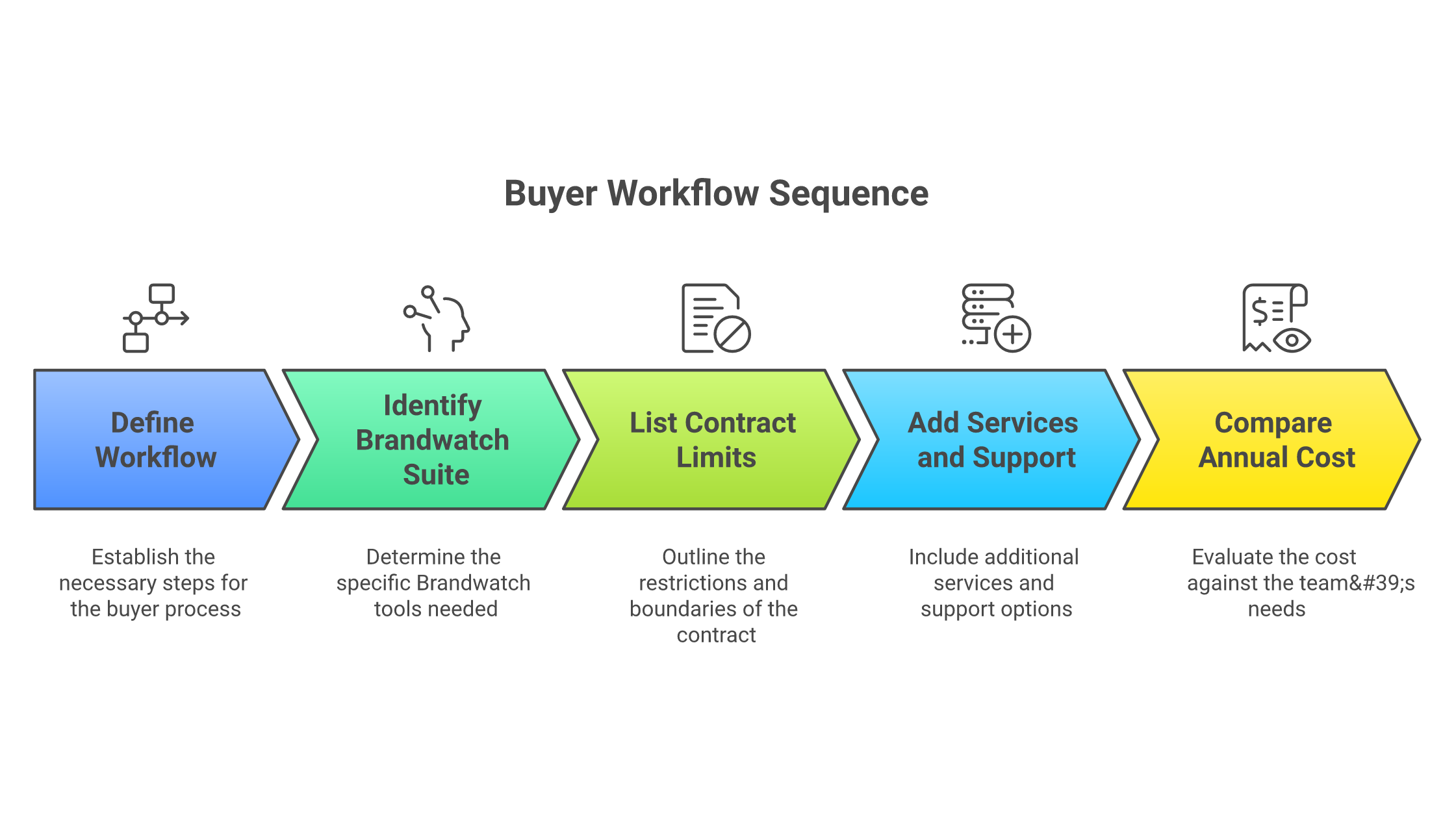
I evaluated Brandwatch pricing based on what a buyer has to defend internally before signing a quote-led social intelligence contract. The number matters, but the real decision is whether the contract scope maps to the workflow you will actually run every week.
Budget shape: Is the platform priced as a monthly tool, an annual enterprise contract, or a custom bundle?
Scope clarity: Which suites, seats, profiles, topics, queries, data sources, exports, and dashboards are included?
Workflow fit: Does the price pay for research depth, publishing operations, influencer work, buyer-signal action, or a mix?
Cost risk: Which services, premium data, overages, support tiers, renewals, and add-ons can change the final bill?
Time to value: Does your team have the analyst ownership to build queries, maintain dashboards, and turn reports into decisions?
What Brandwatch sells#
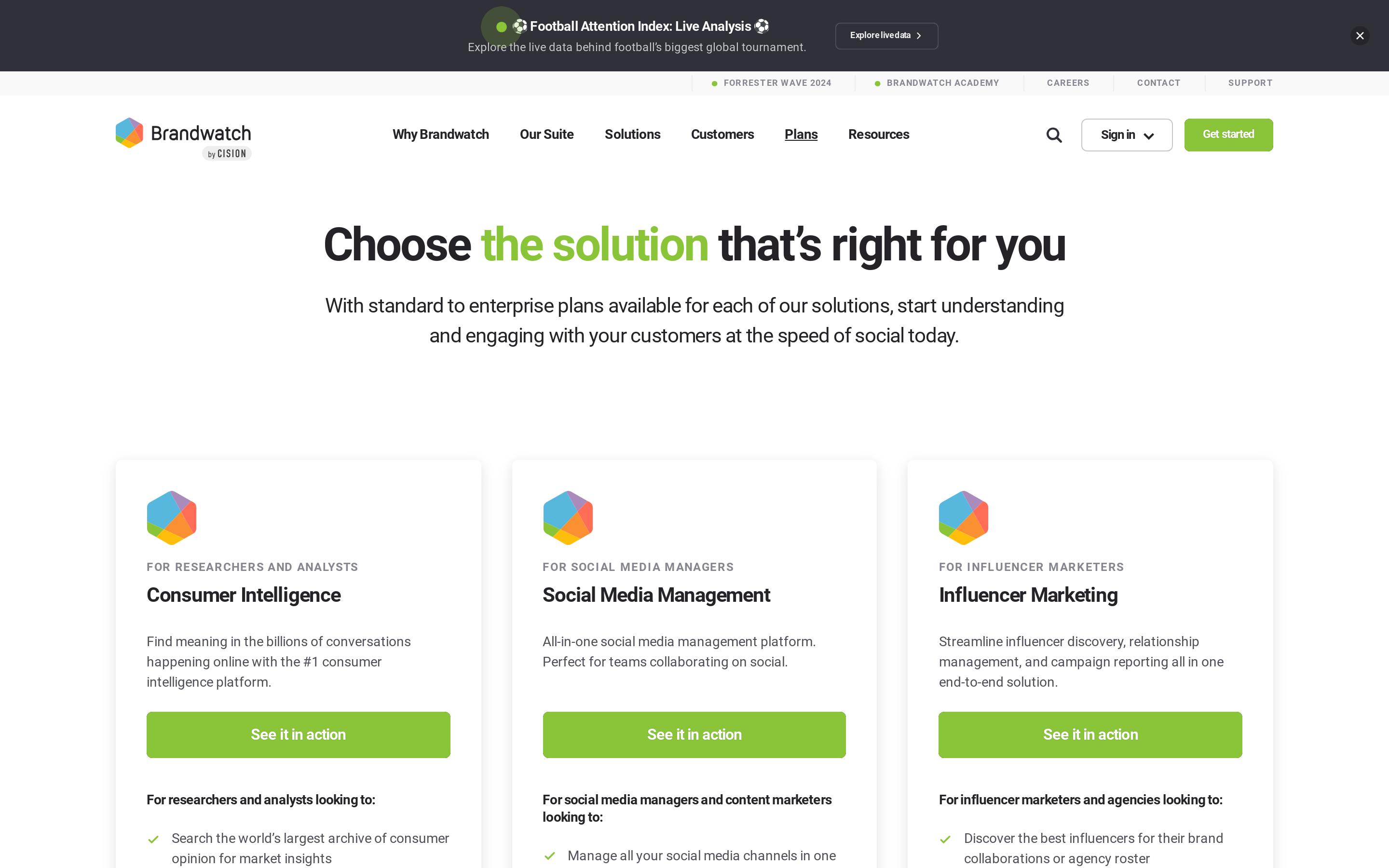
Brandwatch is not one small monitoring app. Its own suite page breaks the product into several areas, with three that matter most for pricing.
Consumer Intelligence | Research and insights teams | Consumer research, listening, segmentation, alerts, reports | Custom demo-led quote |
Social Media Management | Social teams | Publishing, engagement, calendar workflows, benchmarking | Custom demo-led quote |
Influencer Marketing | Influencer teams | Creator discovery, relationship management, campaign reporting | Custom demo-led quote |
The Brandwatch suite also includes Search Intelligence and Media Intelligence & Insights, so your quote can move quickly from "social listening" to a broader Cision/Brandwatch services conversation.
Why Brandwatch does not show a simple price#
Brandwatch sells into enterprise workflows where the cost depends on scope.
Brandwatch claims 1.7 trillion historical conversations back to 2010, 501 million new conversations added daily, conversations from 100 million unique sites, 50+ live visualizations, exports, alerts, API access, and Vizia reporting. Those capabilities are not consumed the same way by every buyer.
A global brand-health team may need historical data, multiple dashboards, custom classifiers, several business units, and executive reporting. A social team may care more about content calendars, inbox workflows, paid and organic coordination, and benchmarking. An influencer team may need creator discovery and campaign reporting.
Brandwatch prices around that scope instead of posting a simple tier table.
Brandwatch pricing benchmarks you can use for planning#
The benchmark I found is Vendr's 2026 procurement dataset: $50,000 average annual contract value across 40 Brandwatch purchases, with observed contracts from $19,542 to $81,200.
TrustRadius lists Brandwatch pricing as $800 for 10k mentions on a Pro plan and $3,000+ for Enterprise with unlimited mentions or queries. Treat that as directional, not a current official rate card.
While summarizing user sentiment that Brandwatch is often viewed as expensive and has a 3.8 value-for-money rating from 255 reviews.
For a buyer building a budget, this gives you a realistic range:
Under $20,000/year: possible in third-party datasets, but do not assume this is available for a current full-suite deployment.
Around $50,000/year: a defensible planning anchor for a serious enterprise evaluation.
Above $80,000/year: plausible when you add multiple suites, more seats, more profiles, more topics, services, support, or global rollout needs.
The exact number still comes from Brandwatch sales.
What changes the final Brandwatch bill#
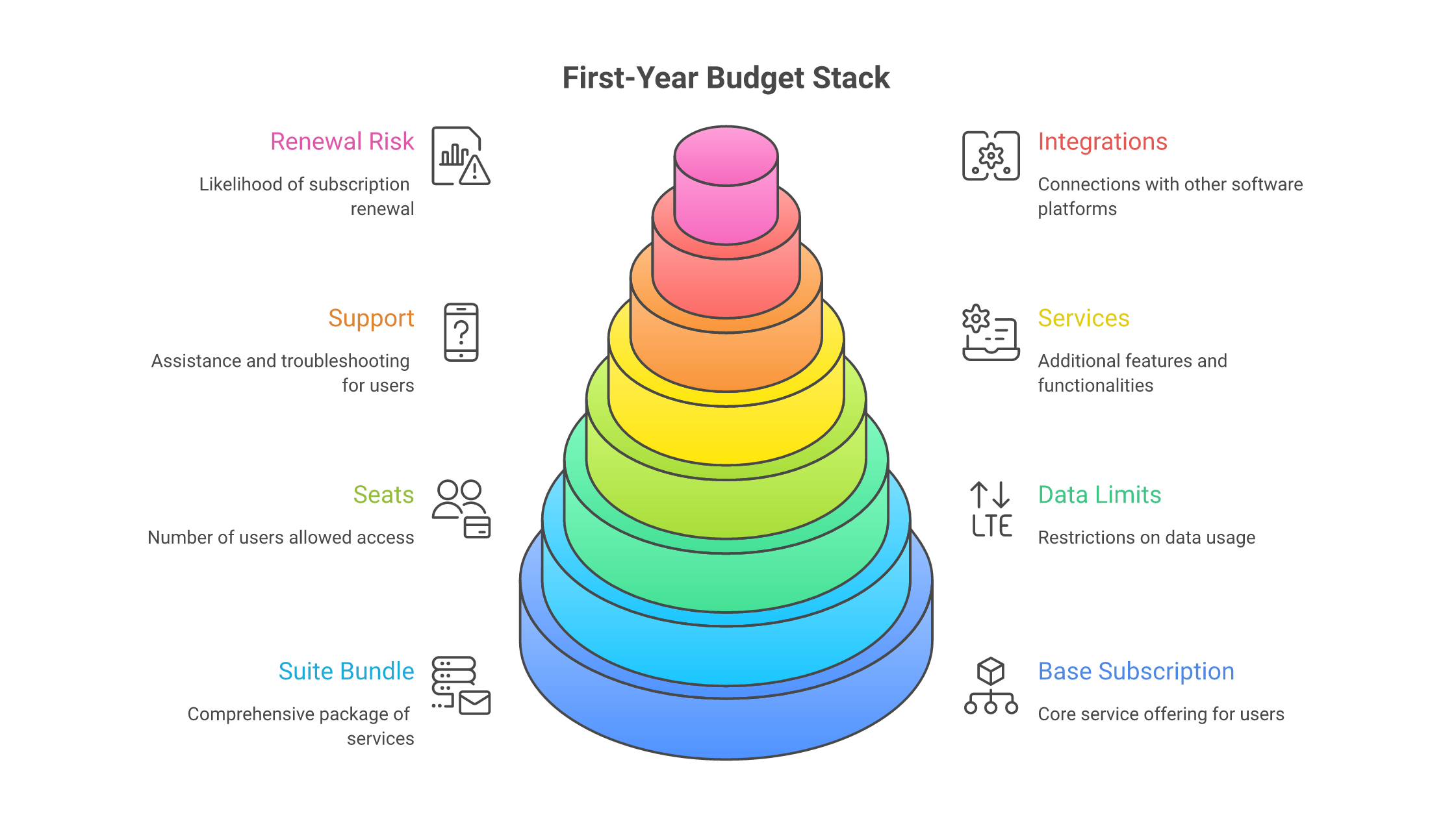
Your Brandwatch quote is usually shaped by six variables.
Suite mix#
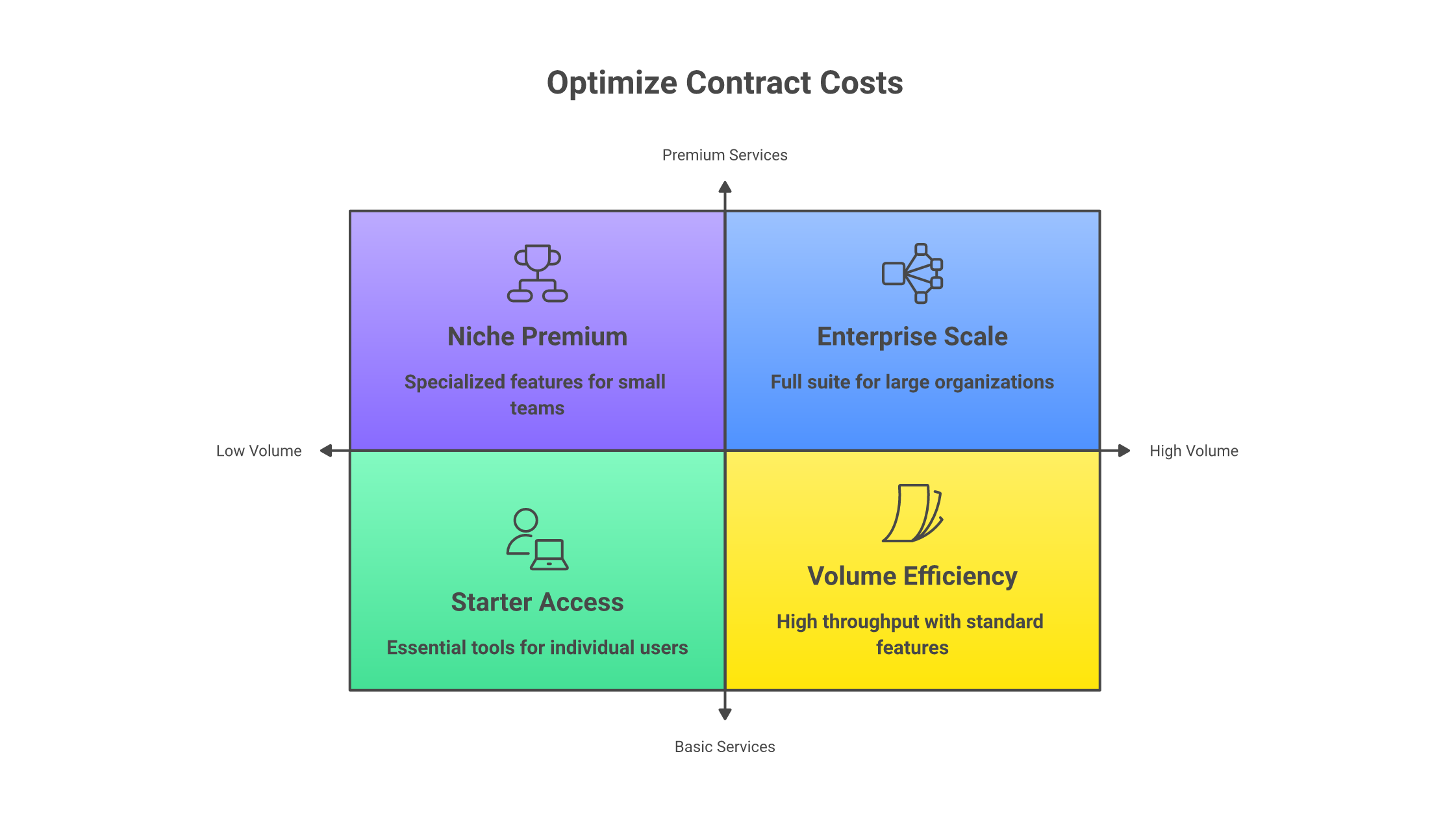
Consumer Intelligence, Social Media Management, and Influencer Marketing solve different jobs. If you bundle two or three, your contract grows.
Bundling can lower the per-unit price, but it can also make the contract harder to trim later because more teams depend on it.
Queries, topics, profiles, and data sources#
Consumer Intelligence pricing tends to move with listening scope: topics, brands, competitors, sources, historical access, exports, and data volume.
Social Media Management pricing tends to move with managed profiles, user seats, publishing workflows, inbox needs, and reporting.
Ask Brandwatch sales to define every limit in writing. A quote that says "social listening" is not enough.
User seats and permission model#
Brandwatch can serve researchers, PR teams, social managers, executives, agencies, analysts, and customer teams. More users usually means more cost, more training, and more governance.
Do not buy seats for every stakeholder who only needs a report. Use exports, alerts, dashboards, or Vizia-style reporting where that is enough.
Historical data and premium access#
Brandwatch's data depth is one of the reasons enterprise buyers consider it. The same depth can become a cost driver if you need long historical windows, premium sources, or heavy exports.
Before signing, ask which sources are included, which require add-ons, which platforms have API restrictions, and how historical backfill is priced.
Services, implementation, and training#
Brandwatch is not a tool most teams configure casually in one afternoon. You may need query architecture, dashboard setup, stakeholder reports, integrations, and team training.
Vendr notes that onboarding and implementation fees can range from a few thousand dollars to 10-15% of annual contract value for complex deployments. Treat services as part of the first-year budget, not a side note.
Renewal and overage terms#
The contract language matters as much as the first quote. Ask about auto-renewal windows, annual price increases, true-up terms, overage rates, cancellation notice, and whether unused capacity rolls over.
This is where a clean buying process protects you from a surprise second-year bill.
What each Brandwatch buyer profile is really paying for#
The same Brandwatch price can be reasonable or hard to defend depending on who owns the workflow.
Research and insights teams#
Research teams pay for breadth and history. Brandwatch's own Consumer Intelligence page emphasizes historical conversations, real-time data, segmentation, AI-assisted analysis, exports, alerts, and live reporting.
That can justify an enterprise contract when the team uses Brandwatch for brand health, category research, campaign readouts, executive reporting, and crisis monitoring.
The risk: if nobody owns query quality, dashboards get noisy and the contract becomes an expensive reporting archive.
Social media teams#
Social teams pay for coordination. Brandwatch Social Media Management covers publishing, engagement, content calendars, benchmarking, and social CRM-style workflows.
This can make sense when you manage many channels, regions, approval flows, and stakeholders.
The risk: if you mainly need scheduling and basic reporting, cheaper social management tools may cover the workflow.
Influencer teams#
Influencer teams pay for creator discovery, relationship management, and campaign reporting. Brandwatch says its Influencer Marketing product helps teams search a database of more than 30 million creators and manage multichannel campaigns.
This is useful when influencer work is a real program with recurring campaigns and reporting pressure.
The risk: if influencer marketing is occasional, a full Brandwatch bundle may add more platform than the team uses.
GTM teams tracking buyer intent#
GTM teams pay for speed to action. They care less about broad market reporting and more about the specific buyer signal: a Reddit thread asking for alternatives, a LinkedIn post describing a pain point, a GitHub discussion about a tool gap, or a Slack community question from an in-market account.
Brandwatch can monitor many sources, but it is not primarily a pipeline-action tool.
CommunityTracker is built to find high-intent signals across Reddit, LinkedIn, X, Bluesky, Hacker News, Indie Hackers, Dev.to, Stack Overflow, Product Hunt, GitHub, and Slack, then help the team act.
Hidden costs to ask about before you sign#
Use this checklist before you treat any Brandwatch quote as final.
Which suites are included: Consumer Intelligence, Social Media Management, Influencer Marketing, Search Intelligence, or services?
How many users, profiles, topics, queries, dashboards, alerts, and exports are included?
What happens when mention volume, managed profiles, or query volume grows?
Which data sources are included, and which premium or historical sources add cost?
Is API access included, and are there rate limits or export caps?
Are implementation, onboarding, training, analyst services, or custom reports included?
Which support tier is included, and what response times does it promise?
Does the contract auto-renew, and how much notice do you need to cancel?
Is there a price-increase cap at renewal?
If sales cannot define a limit, assume finance will ask about it later.
When Brandwatch becomes expensive#
Brandwatch becomes expensive when the contract expands faster than the workflow.
Watch for these thresholds:
You need multiple suites because one team wants listening, another wants publishing, and another wants influencer reporting.
You add many users who only need read-only reports.
You monitor too many topics before you know which signals matter.
You need heavy historical data, premium sources, exports, or API access.
You require paid services to build dashboards, queries, or integrations.
You sign a multi-year contract before proving weekly usage.
None of these are wrong by default. They are only a problem when the team cannot point to the decisions Brandwatch improves.
Final buying advice: match the price to the next move#
Buy Brandwatch when the next move is organizational intelligence: understand the market, brief executives, monitor brand risk, compare competitors, and coordinate large social or influencer programs.
Choose a CommunityTracker when the next move is operational: catch one high-intent conversation, score it, route it, and respond while it still matters.
If you are evaluating Brandwatch for a GTM team, run a smaller test before the enterprise buying process. Pick five buyer-intent keywords, track them across the communities your buyers actually use, and measure how many useful sales or marketing actions you can take in two weeks.
If that test proves the signal is valuable, then decide whether you need Brandwatch's enterprise intelligence.
Start finding Reddit leads with CommunityTracker. Add your website, choose your goal, and get relevant Reddit conversations you can turn into lead opportunities.