Most GTM teams treat the demo request as the starting line.
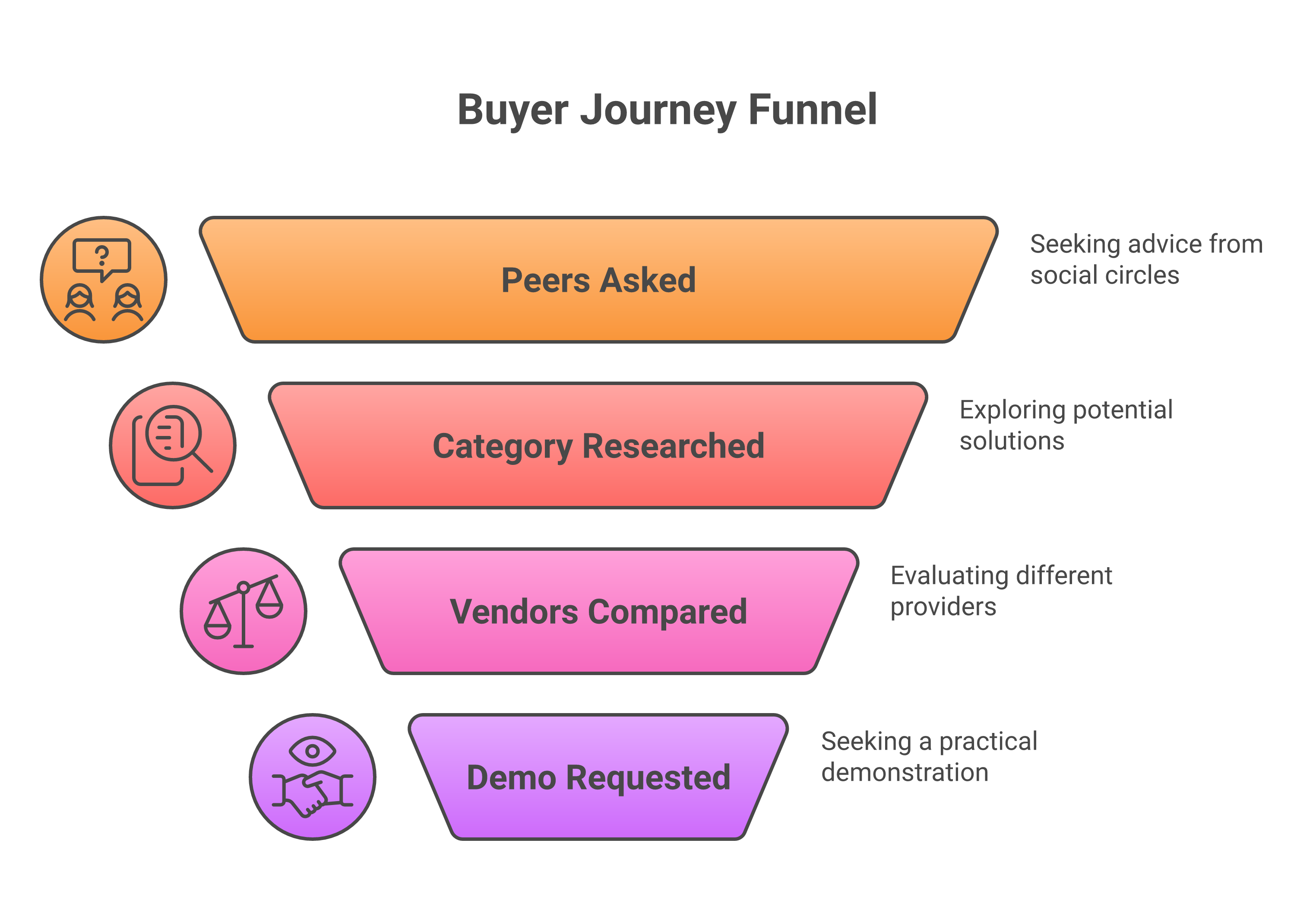
By then, the buyer has compared vendors, asked peers, searched Reddit, read LinkedIn threads, checked GitHub issues, watched category debates, and built a shortlist. The form fill is not the beginning of demand. It is the moment demand becomes visible to your CRM.
Demand signal detection is the system for everything before that moment.
It means finding signs that a company or buyer group is moving toward a problem, category, vendor, or decision, then turning that signal into the next move: content, sales context, community response, account prioritization, product feedback, or partner action.
The job is not to collect more mentions. The job is to identify which conversations matter, why they matter, and who should act.
If your team already sees scattered Reddit threads, LinkedIn comments, GitHub issues, and Slack questions but cannot turn them into owned GTM action, use CommunityTracker to centralize the watchlist, filter for buyer intent, and route the next move.
What demand signal detection actually means#
Demand signal detection is the process of finding and classifying signs that a buyer, account, or market segment is showing intent before they formally enter your funnel.
A signal is not just a keyword match. A founder writing "we need a better way to track customer feedback from Slack" is different from someone sharing a generic article.
A developer opening a GitHub issue about migration pain is different from a casual brand mention.
A RevOps leader asking for "alternatives to our current enrichment provider" is different from a low-intent engagement with a category post.
Good detection separates those moments.
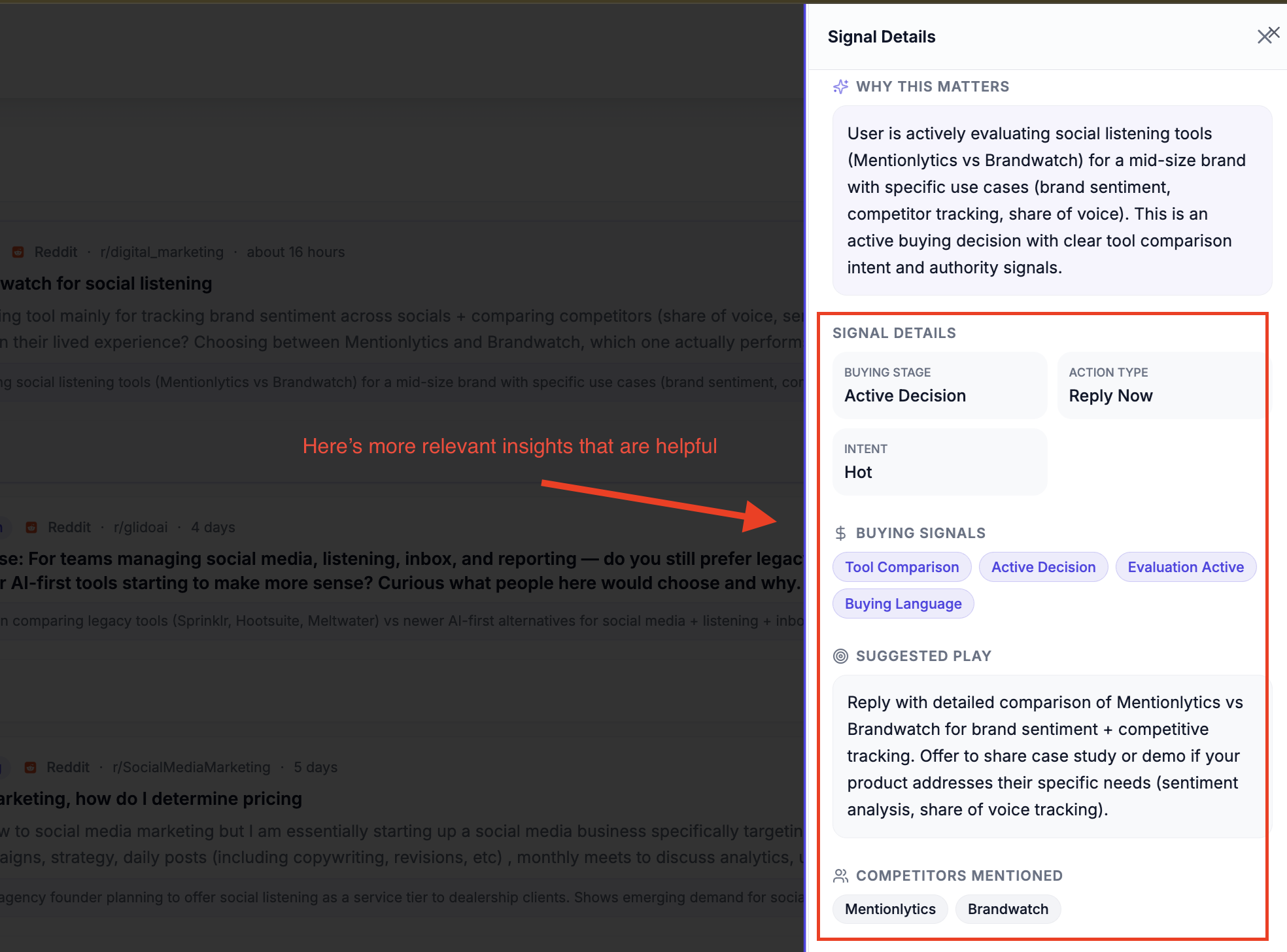
Good signal systems answer five questions:
What happened?
Who is involved?
What problem or trigger does it reveal?
How close is this to a buying decision?
What should GTM do next?
That last question matters most. Do not just show the post. Show the next move.
Signal detection is not the same as social listening#
Traditional social listening tracks brand mentions, sentiment, share of voice, and audience volume. That helps comms teams understand reputation and reach.
Demand signal detection has a narrower commercial job. A social listening dashboard might show that your competitor was mentioned 132 times this week. A demand signal workflow should tell you that three mentions were high-intent comparison threads, one came from a target-account operator, and the next action is to send a technical answer within 24 hours.
Signal detection is not the same as lead scoring#
Lead scoring usually starts after an identifiable person interacts with your owned funnel: form fills, page visits, email engagement, webinar attendance, or product activity.
Demand signal detection starts earlier and wider. It includes people who have not visited your site, downloaded a guide, or heard of your brand yet. They still leave clues where they ask peers for help and compare options.
That makes demand signal detection less tidy than lead scoring, but more useful for catching buyers while the decision is still forming.
If your team keeps finding buying conversations too late, see how CommunityTracker turns community signals into pipeline actions.
Why demo requests arrive too late#
B2B buying has shifted toward self-directed research. Buyers still talk to sales, but that conversation often starts after the shortlist has narrowed.
Gartner found that B2B buyers considering a purchase spend only 17% of their buying time meeting with potential suppliers, and that time is split across all vendors under consideration, not one vendor alone. Gartner's B2B buying journey research frames the sales conversation as one small slice of a larger buying process.
6sense's 2025 buyer research points in the same direction. Its report says first contact moved earlier than the prior year, from about 69% of the journey to 61%, but buyers still initiate contact close to 80% of the time and the vendor contacted first wins roughly 8 out of 10 deals.
6sense's 2025 B2B Buyer Experience Report also says buyers shortlist about four of five vendors by day one and purchase from that early list 85% to 95% of the time.
That is the problem: if your first signal is a demo request, your real competition started weeks or months earlier.
LinkedIn's B2B Institute describes the same timing issue through the 95-5 rule: most category buyers are out of market at any given time, while a small group is actively buying now.
LinkedIn's 95-5 rule argues that marketers need to build memory and relevance before the active buying window opens.
Demand signal detection sits between brand building and lead capture. It helps you see the transition from future buyer to active researcher.
The signal types smart GTM teams watch#
Not every mention deserves action. The useful move is to build a signal taxonomy that maps conversations to intent level and owner.
Problem signals#
Problem signals show pain before the buyer names a category. These are posts like:
"How are you handling onboarding drop-off after signup?"
"Our team is drowning in support tickets from Slack."
"Is anyone tracking competitor mentions across Reddit and LinkedIn?"
These signals are early. They are not always sales-ready. But they are strong inputs for content, product marketing, and community because they reveal the buyer's language before your positioning touches it.
Next move: route the thread to product marketing for messaging, and to community or founder-led sales if a helpful answer fits the community rules.
Category signals#
Category signals show that the buyer has attached their problem to a market. They ask about "social listening tools," "intent data," "community monitoring," "customer intelligence," or another named category.
This is where SEO and community intelligence meet. The language in these threads often becomes search language later. If ten target buyers describe the category differently than your website does, the market is giving you a positioning correction.
Next move: update comparison pages, category pages, sales talk tracks, and community responses with the exact language buyers use.
Competitor and alternative signals#
Competitor signals are often the most commercially direct. They include:
"Has anyone switched from Vendor A to Vendor B?"
"Vendor A pricing is getting hard to justify."
"Looking for an alternative with better Slack alerts."
"Does Vendor B cover GitHub and Hacker News?"
These conversations tell you the buying criteria and where competitors are vulnerable, but the response needs discipline. Communities do not reward drive-by pitches.
Next move: build a useful answer first. If your product fits, disclose the connection and explain the specific fit. If it does not, capture the objection for positioning and sales enablement.
Implementation signals#
Implementation signals appear when users hit a workflow blocker. In developer and technical markets, GitHub issues, Stack Overflow questions, Dev.to posts, and Hacker News threads often reveal these signals before a buyer talks to sales.
A buyer may not say "we are in-market." They may say the current API is brittle, a migration is stuck, an integration is missing, or a homegrown workaround is breaking.
Next move: route technical signals to solutions, developer relations, or product. A fast answer can create trust before sales enters the conversation.
Timing signals#
Timing signals show that an account's situation changed. Funding, hiring, layoffs, leadership changes, compliance deadlines, new product launches, and tech-stack changes can all shift buying urgency.
These signals work best when paired with conversation signals. A company hiring a RevOps lead is interesting. A company hiring a RevOps lead while its operators ask peers about attribution problems is stronger.
Next move: enrich the account, update prioritization, and give sales the context behind the timing.
Where demand signals show up now#
Owned channels still matter, but early demand often forms away from owned channels.
CommunityTracker monitors buyer signals across Reddit, Slack, Discord, LinkedIn, X, GitHub, Product Hunt, Stack Overflow, Indie Hackers, Hacker News, Dev.to, and more. It helps GTM teams find high-intent conversations, track competitor share of voice, and turn community signals into pipeline.
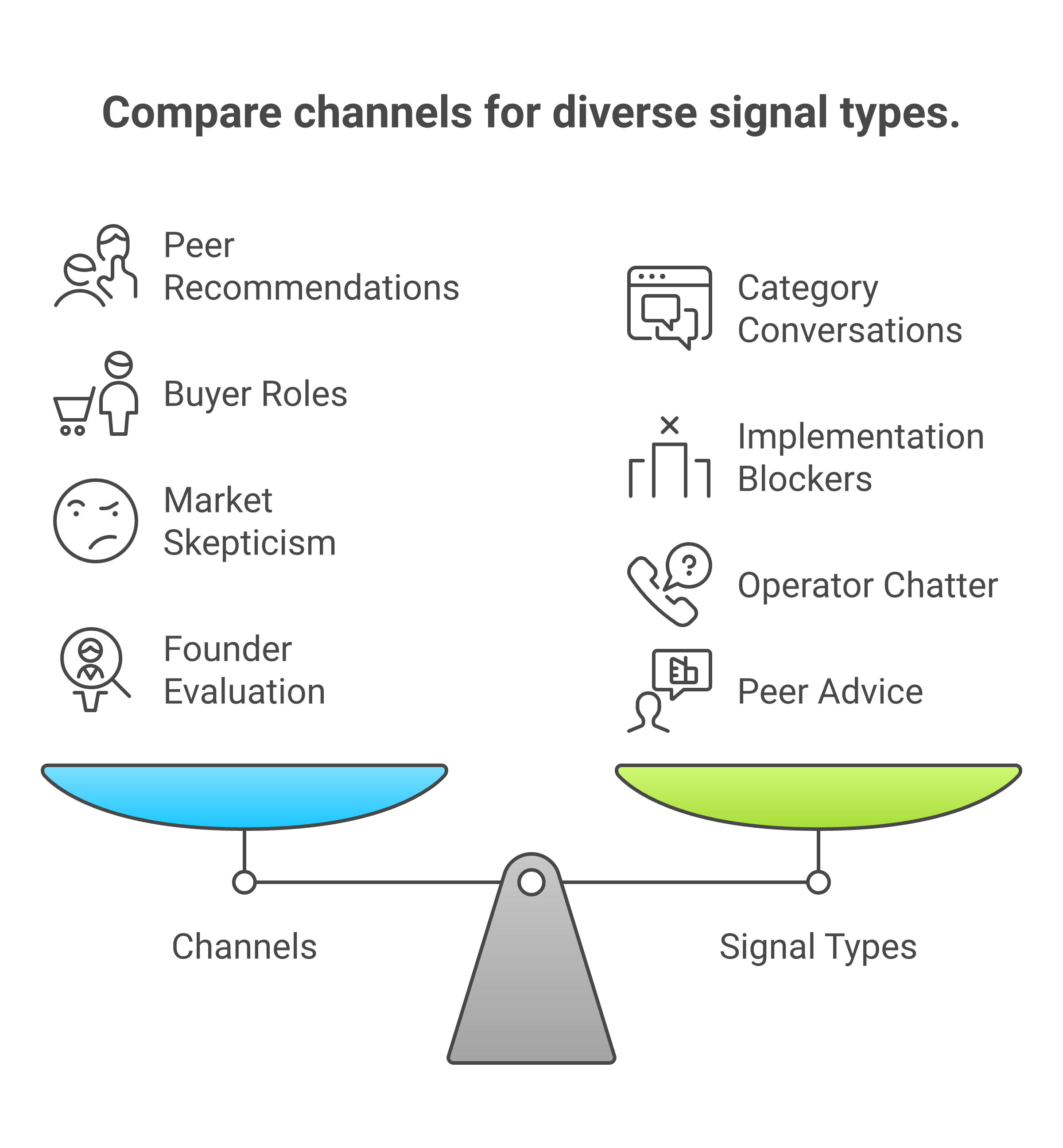
Each channel carries a different kind of signal:
Reddit: anonymous research, candid comparisons, recommendations, complaints, and category confusion.
LinkedIn: category narratives, founder posts, executive comments, practitioner debates, and visible network effects.
X and Bluesky: fast market reactions, launch feedback, founder conversations, and narrow expert clusters.
GitHub, Stack Overflow, and Dev.to: implementation pain for dev tools, infrastructure, data, AI, and technical SaaS.
Hacker News and Indie Hackers: category debates, builder objections, pricing sensitivity, and product skepticism.
How to build a demand signal detection workflow#
The mistake is trying to monitor everything at once. Start with the signals that map to your ICP, your category, and your GTM motion.
1. Define the buying situations#
Before you write queries, list the situations that create demand.
For a sales intelligence product, buying situations may include poor enrichment quality, missed buying committees, CRM data decay, or a new outbound motion.
For a community intelligence product, they may include missed Reddit threads, low-quality mention alerts, competitor comparison blind spots, or a need to route community conversations into outbound and content workflows.
2. Build query clusters around pain, category, and competitors#
A practical detection system usually starts with four clusters:
Pain phrases: "struggling with," "how do you track," "any way to monitor," "fed up with," "manual process"
Category phrases: "best tool for," "social listening," "intent data," "community monitoring," "buyer signals"
Competitor phrases: competitor names, product names, plan names, common misspellings, and feature-specific comparisons
Change phrases: "switching from," "migrating off," "pricing changed," "alternative to," "what replaced"
Refine by channel. Reddit queries should capture conversational language. GitHub queries should capture issue titles, errors, and repository terms.
LinkedIn monitoring should include people, roles, categories, and recurring narratives.
3. Filter for intent, not just volume#
Volume is seductive. It is also noisy.
A hundred low-context mentions can bury the one buyer asking for a recommendation this week. A useful filter scores signals by commercial relevance, not by raw frequency.
Look for:
Problem clarity: does the post describe a real pain?
Buyer fit: does the person, company, or community match your ICP?
Decision proximity: are they researching, comparing, switching, or implementing?
Recency: is the window still open?
Actionability: can your team respond, enrich, route, or learn from it?
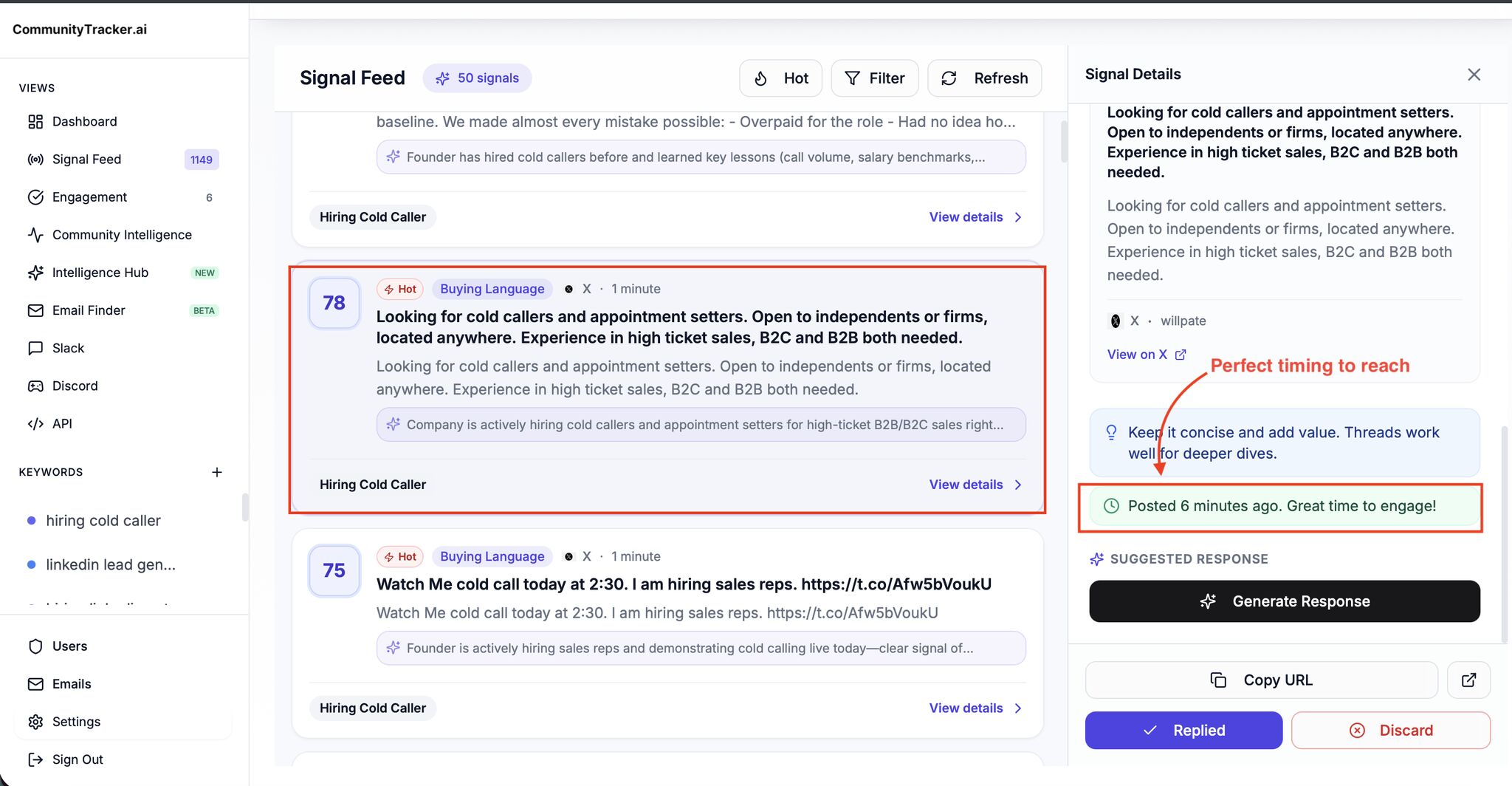
CommunityTracker uses intent-based filtering to reduce noise and surface commercially relevant signals with clear priority.
Its AI social monitoring workflow tracks mentions, detects buying signals, and generates response workflows across 12+ communities.
4. Route the signal to the right owner#
Detection without routing creates another inbox to ignore.
Every high-intent signal needs an owner and a default action. Sales should not receive every community mention. Product marketing should not own every technical issue.
Community should not decide alone whether a signal belongs in content, sales, support, or product.
A simple routing model works:
High-intent buyer research: sales or founder-led sales, with source context and suggested response
Competitor comparison: product marketing, sales enablement, and community
Implementation blocker: solutions, developer relations, or product
Messaging gap: product marketing and content
Market narrative shift: leadership, product marketing, and demand gen
Share of voice gap: demand gen and content strategy
5. Close the loop after action#
A routed signal should create a record of what happened next.
Did the team respond? Did the thread produce a meeting? Did it reveal a content gap or pricing objection? Did the same pain show up in five more places?
Without that loop, signal detection becomes another alert stream. With it, signal detection becomes market memory.
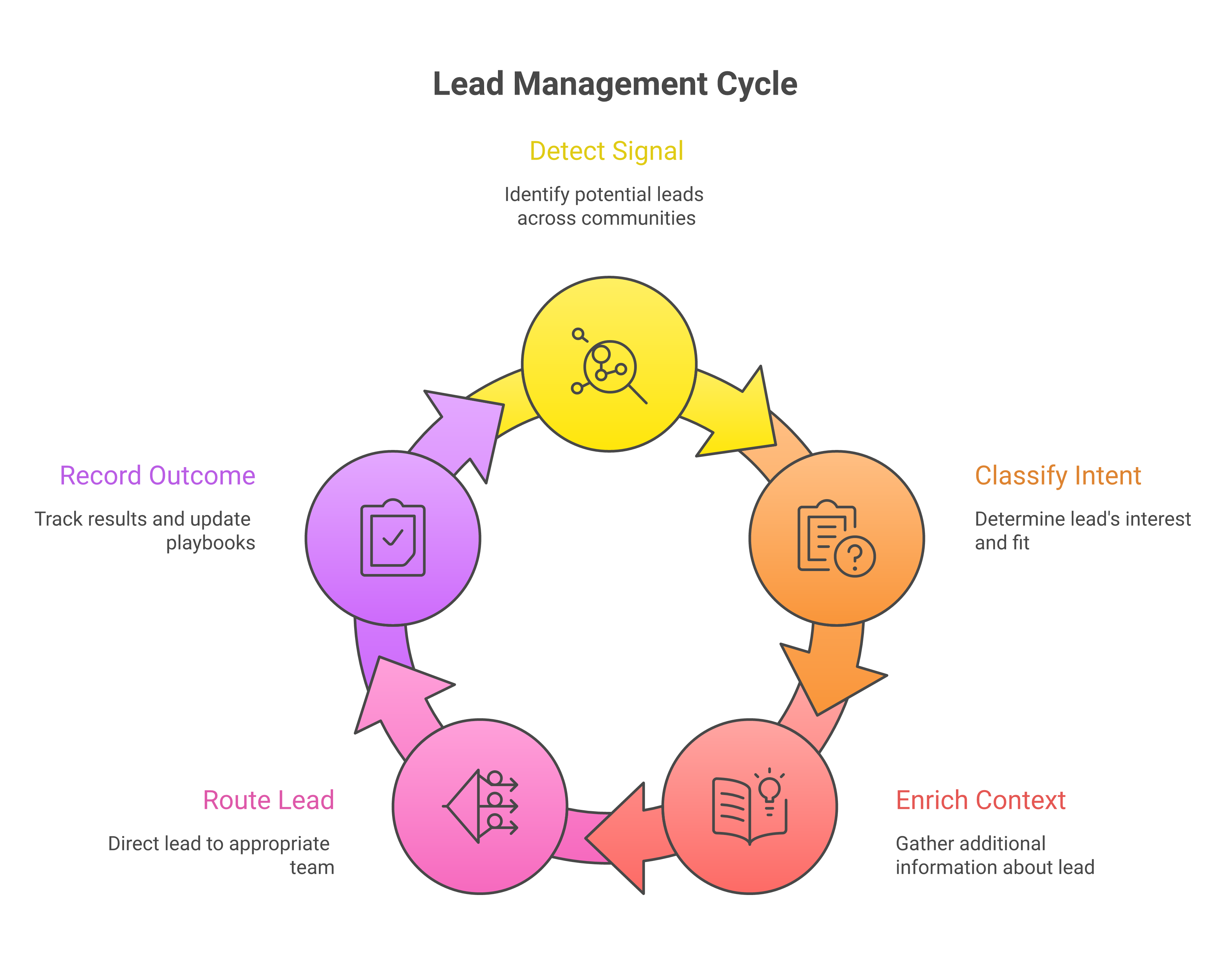
For CT-fit teams, this is the handoff point: connect monitored communities to a response workflow instead of asking sales, content, and product teams to check separate feeds.
If your team keeps finding buying conversations too late, see how CommunityTracker turns community signals into pipeline actions.
How to score demand signals without overcomplicating it#
You do not need a 40-field scoring model on day one. You need enough structure to separate noise from action.
Use a 1 to 5 score across four dimensions:
Intent: how clearly does the signal show buying movement?
Fit: how closely does the person, company, or community match your ICP?
Timing: how fresh and urgent is the signal?
Influence: how visible or trusted is the conversation?
Then add one operational question: what will it cost to act?
Activation cost separates a signal your team should save from a signal your team should send today. A high-intent thread that needs a two-sentence founder answer is cheap to activate. A broad market narrative that needs research and a new comparison page is valuable, but it should not jump ahead of an active buyer asking for help this week.
Signal profile | Owner | Response timing | Default action |
High intent, high fit, low activation cost | Sales, founder, or community lead | Same day | Helpful reply, account research, tailored outreach |
High intent, high fit, high activation cost | Sales + product marketing | 24–48 hours | Build the answer, add context, then respond |
Early pain, high fit | Product marketing or content | Weekly review | Save language, create content, monitor repeat mentions |
High influence, low immediate intent | Demand gen or leadership | Weekly review | Track narrative, improve positioning, brief sales |
Low fit or stale | Archive | No SLA | Ignore unless the signal repeats |
A post asking "what tool should we use to monitor Reddit and LinkedIn mentions for our B2B SaaS?" in a niche founder community may score high on intent and fit, even if the author is anonymous.
A viral market-trend post may score high on influence but low on immediate intent. That belongs in content strategy, not sales follow-up.
The scoring model should determine the next move.
High-intent, high-fit, fresh signal with low activation cost: act now.
High-fit, early pain signal: save, monitor, and use for content or community response.
High-influence narrative signal: feed positioning and demand gen.
Low-fit mention: ignore or archive.
Buying-group context improves the decision. One operator creates useful context. An operator, manager, technical evaluator, and related hiring trigger create an account-level motion. Route it with the thread, role context, company context, and recommended owner.
What smart GTM teams do with detected signals#
The value of demand signal detection comes from action. The best teams build playbooks.
Sales uses signals for context, not scripts#
A signal gives sales a reason to understand the account, not a license to send a lazy message. "Saw your Reddit post. Want a demo?" wastes the signal. A useful response names the workflow, shares a checklist, and gives the buyer a reason to keep talking.
Product marketing turns signals into sharper positioning#
Community signals reveal the words buyers use before they repeat vendor language. If buyers keep asking whether your category works for Slack communities, that is not just a support question. It is a positioning and proof gap.
Content teams turn repeated questions into search assets#
Repeated community questions often become search demand. When buyers ask the same question across Reddit, LinkedIn, Hacker News, and Slack, write the answer they are already trying to find. Use the community language, compare the real options, and name the tradeoffs.
Product teams use signals as qualitative research#
Implementation threads, competitor frustrations, and workflow complaints can reveal missing integrations, confusing onboarding, or feature gaps that never make it into formal sales calls. Product needs patterns, not a stream of raw posts.
Common mistakes that weaken signal detection#
The first mistake is keyword obsession. Keywords find the post. They do not tell you whether the post matters.
The second mistake is treating every signal like a sales lead. Some signals are for content. Some are for product. Some are for leadership. Some are for community response. Forcing all of them into sales creates bad outreach and poor trust.
The third mistake is ignoring buying-group context. One anonymous question matters less than a pattern across operators, managers, technical evaluators, and decision-makers from the same account or segment.
The fourth mistake is ignoring negative signals. Competitor complaints, pricing objections, category skepticism, and implementation failures all teach you where demand is blocked.
The fifth mistake is separating signal detection from workflow. If the signal does not reach the person who can act, it is just another dashboard.
A 30-day demand signal detection plan#
Start with one ICP, one product line, and three to five communities where buyers already talk.
Week one: define the buying situations, pains, competitors, category terms, and change events that signal movement.
Week two: build query clusters and monitor the channels that match your market. Optimize for useful signals before broad coverage.
Week three: classify and route. Define intent levels, assign owners, and write the default action for each type.
Week four: review outcomes. Count high-intent signals, response time, actions taken, meetings influenced, content briefs created, objections discovered, and competitor gaps logged.
The real advantage: buyer context before the form fill#
Demand signal detection gives GTM teams a practical way to compete before buyers raise their hands.
It does not replace brand, sales, or product marketing. It gives each team better timing and sharper context.
The buyer asking peers for advice today may become a demo request next month. The competitor complaint in a Reddit thread may become tomorrow's comparison page. The GitHub issue may expose a workflow gap sales keeps hearing but cannot prove.
Smart GTM teams treat those signals as work inputs, not trivia.
From signal discovery to GTM action: find the buyer conversation, sort the intent, route the next move, and act before the demo request is the only thing left to measure.
If those signals are already spread across Reddit, LinkedIn, X, GitHub, HN, Slack, and operator communities, use CommunityTracker to monitor the channels, identify high-intent conversations, and send the right signal to the right GTM owner.
If your team keeps finding buying conversations too late, see how CommunityTracker turns community signals into pipeline actions.