Keyword monitoring tools help you track a word or phrase across websites and public posts. The hard part starts when a common term returns hundreds of results. We still need to remove noise and find the mentions that call for a response.
Some tools send a basic alert. Others group mentions and show changes in volume or sentiment. A smaller set can spot a product question or competitor complaint and send it to the person who needs to reply.
This list compares all three types.
TL;DR#
CommunityTracker - Best for finding high-intent buyer signals and competitor mentions across eleven platforms
Google Alerts - Best for free web page alerts
Talkwalker Alerts - Best for free web and X alerts
F5Bot - Best for free Reddit and Hacker News monitoring
Social Searcher - Best for low-cost searches and saved posts
Syften - Best for operator alerts across technical communities
Octolens - Best for DevRel teams that need API delivery
Awario - Best for Boolean monitoring on an SMB budget
Mentionlytics - Best for multilingual listening and reports
BrandMentions - Best for agencies that need white-label reports
Brand24 - Best for mention analysis with set quotas
Mention - Best for enterprise social intelligence
Hootsuite - Best for teams that publish and listen in one suite
Sprout Social - Best for social inbox and profile processes
BuzzSumo - Best for content and media trend monitoring
Free tools work when the query is narrow, and one person owns the inbox. CommunityTracker is the better starting point when the match must become a scored signal and a next move. Brand24 or Mentionlytics fits teams that need broad listening reports.
How I evaluated keyword monitoring tools#
After a keyword match appears, the useful test is whether the product can remove repeated posts and vague chatter, show why one result matters, reach the right owner without manual copying, and support a response while the conversation is still active.
Coverage: Does the tool watch the web or the places where buyers discuss products?
Filtering: Can you control noise with Boolean logic or intent scoring?
Alert speed: Can the right owner see a time-sensitive mention soon enough to act?
Delivery: Can a match move into Slack or an API without manual copying?
Cost ceiling: Does the free tier solve a real job, and what forces an upgrade?
Keyword monitoring tools compared#
Tool | Permanent free option? | Finds buyer-intent/questions? | Team notifications? | Best use |
CommunityTracker | ✓ | ✓ | ✓ | Buyer-intent conversations and competitor mentions and warm outreach |
Google Alerts | ✓ | — | ◐ | Newly indexed web/search results |
Talkwalker Alerts | ✓ | — | ✓ | Free web and X mention alerts |
F5Bot | ✓ | ✓ | ✓ | Reddit, Hacker News and Lobsters intent monitoring |
Social Searcher | ✓ | — | ◐ | Lightweight social/web monitoring |
Syften | — | ✓ | ✓ | Community monitoring and buying-intent conversations |
Octolens | — | ✓ | ✓ | AI-filtered B2B social listening and intent alerts |
Awario | — | ✓ | ✓ | Social listening and lead discovery |
Mentionlytics | — | ◐ | ✓ | Social listening, marketing leads and share of voice |
BrandMentions | — | — | ✓ | Agency and white-label reporting |
Brand24 | — | ◐ | ✓ | Brand monitoring, trends and AI analysis |
Mention | — | — | ✓ | Team monitoring, assignments and reporting |
Hootsuite | — | — | ✓ | Publishing, inbox and listening together |
Sprout Social | — | — | ✓ | Social inbox and team workflows |
BuzzSumo | — | ◐ | ✓ | Content trends, media monitoring and question research |
✓ = yes. ◐ = limited or requires setup. — = no or not the product's main job.
The table gives the buying boundary. The sections below explain what each tool does after a keyword appears.
1. CommunityTracker#
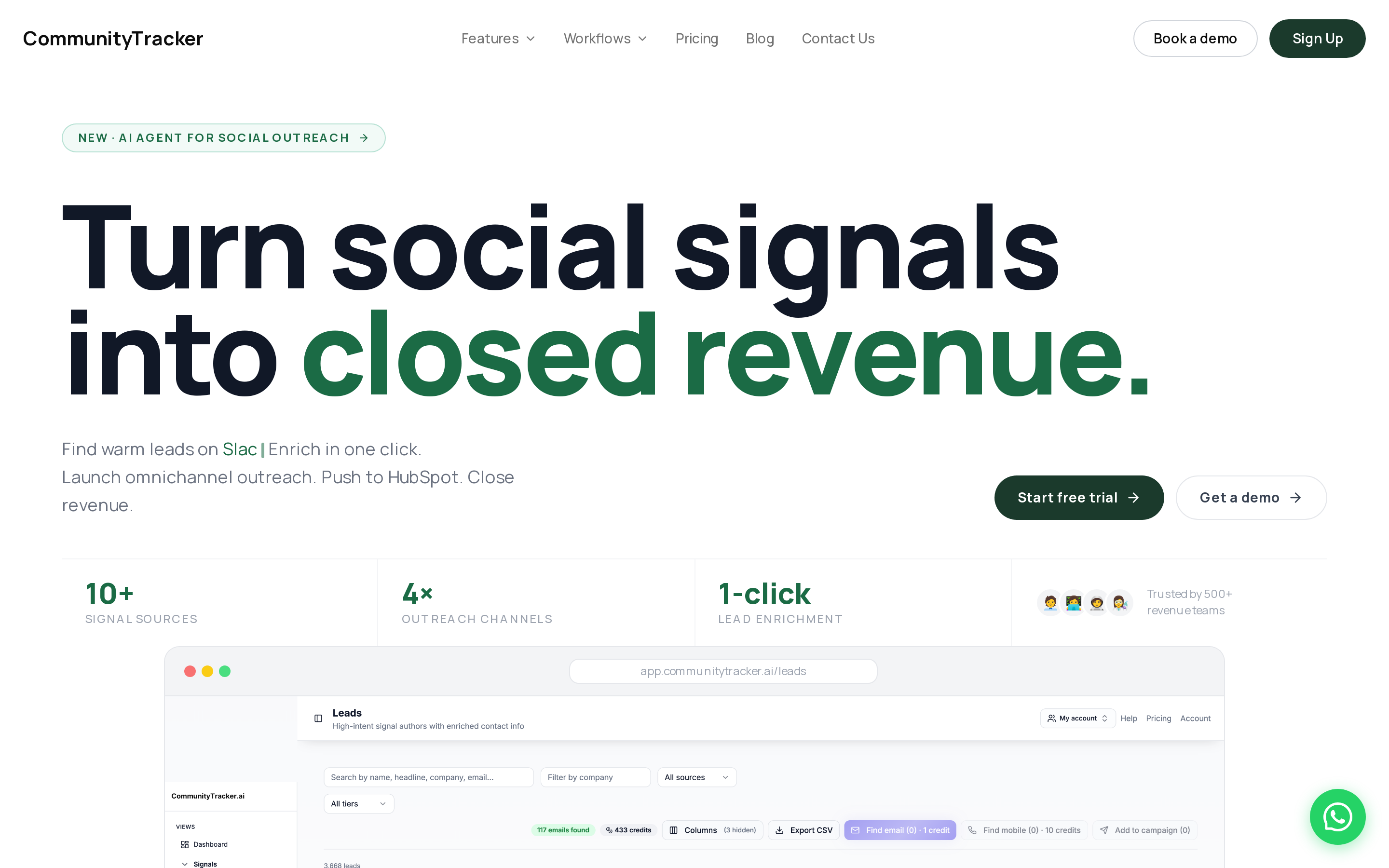
CommunityTracker monitors keywords across 11 sources, including Reddit, LinkedIn, X, Bluesky, Hacker News, Indie Hackers, Dev.to, Stack Overflow, Product Hunt, GitHub, and Slack.
Instead of treating every keyword mention the same, it analyzes the context around each post. This helps distinguish a genuine product question from a casual mention, while also surfacing competitor complaints, alternative requests, and other high-intent conversations.
Relevant posts can be sent directly to Slack with a suggested reply, so your team can respond while the conversation is still active.
Features#
Keyword tracking across major b2b social media channels
Filters that identify product questions and competitor mentions
Intent scores for matched posts and comments
Suggested replies based on the discussion
Slack alerts and warm email delivery
Share of Voice reports
Pricing: #
The free plan costs $0 and tracks one keyword on Reddit with daily alerts and basic analytics. Starter costs $39 per month for four keywords and 5,000 mentions. Pro costs $99 per month for ten keywords and unlimited mentions. Advanced costs $199 per month and raises the limit to 20 keywords.
Pros#
AI intent scoring filters out low-value mentions and prioritizes conversations that show real buying intent.
Suggested replies are generated with the post context, making it easier to respond quickly without sounding generic.
Monitors 11 sources, covering both technical communities and mainstream social platforms.
Slack alerts help teams act on relevant conversations while they are still fresh.
Get the email addresses of the people who are posting and run email and LinkedIn campaigns.
Cons#
CommunityTracker does not publish or schedule posts.
The free plan watches Reddit only and sends daily alerts.
It does not monitor TV or print coverage.
CommunityTracker fits a B2B team that wants to find product questions and competitor mentions before they disappear in a feed. A saved search is enough when you only monitor one small forum.
Insightful Read: The practical distinction between individual alerts and patterns is covered in our guide to social media monitoring and social listening .
2. Google Alerts#
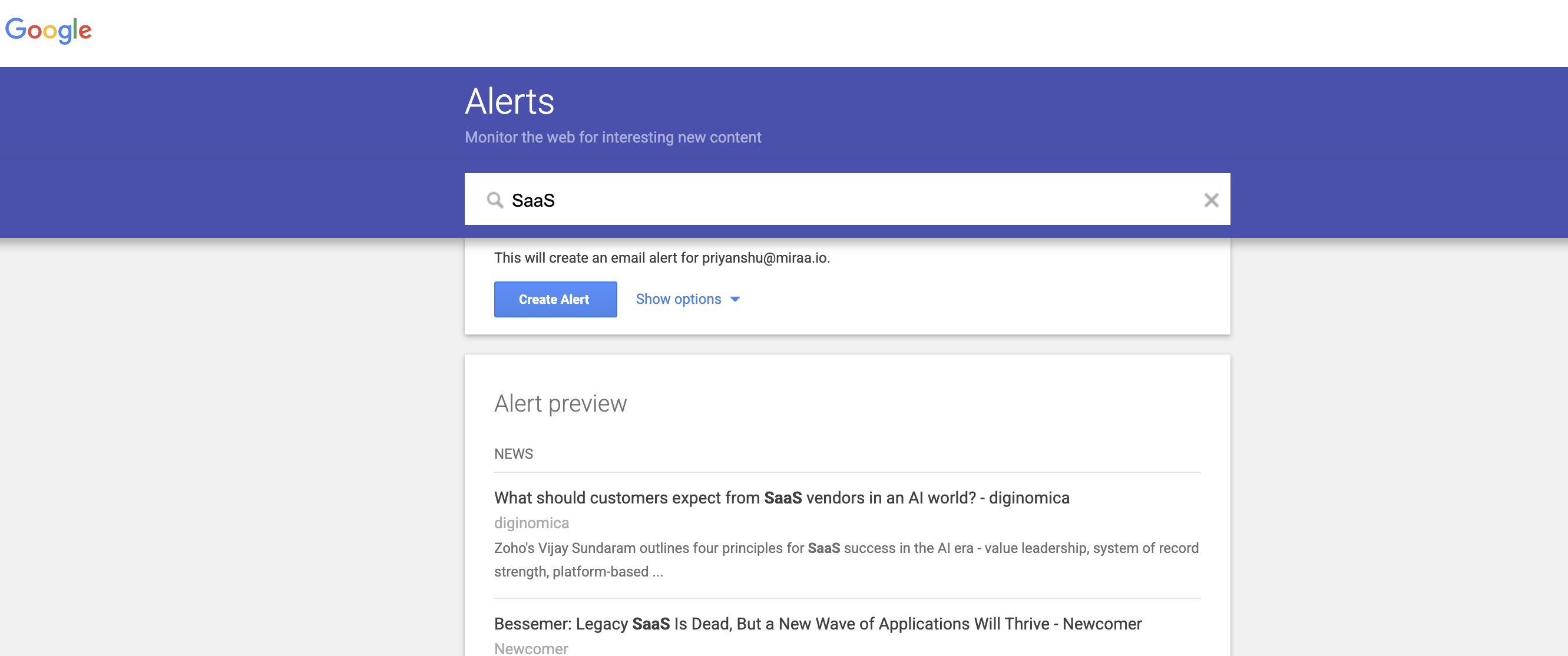
Google Alerts watches new pages in Google's index. After you enter a query, Google applies your source and region settings, checks indexed pages for exact phrases and exclusions, removes results that do not match those rules, and sends the remaining links by email or RSS at the delivery rate you selected. Search operators help remove job pages and unrelated meanings.
It works for press mentions and new articles. It does not reliably catch comments inside Reddit or fast posts on X. The delay between publication and indexing also makes it a poor crisis queue.
Features#
Exact phrase and exclusion operators
Source and region controls
Email or RSS delivery
Daily or weekly digests
Pricing: #
Access costs $0 with no paid tier. Google publishes no fixed alert count in the product interface. A free trial is unnecessary because access does not expire.
Pros#
Access stays free with no expiry date.
Email and RSS support a simple personal watchlist.
Cons#
Results depend on when Google indexes a page.
Reddit comments and fast X posts often do not appear.
Google Alerts does not classify intent or assign a response owner.
Community comments often never appear.
Start here for press pages and new indexed articles. Move to a social listening tool when comments or timing affect the outcome. Our Google Alerts setup guide shows query patterns that cut noise.
3. Talkwalker Alerts#
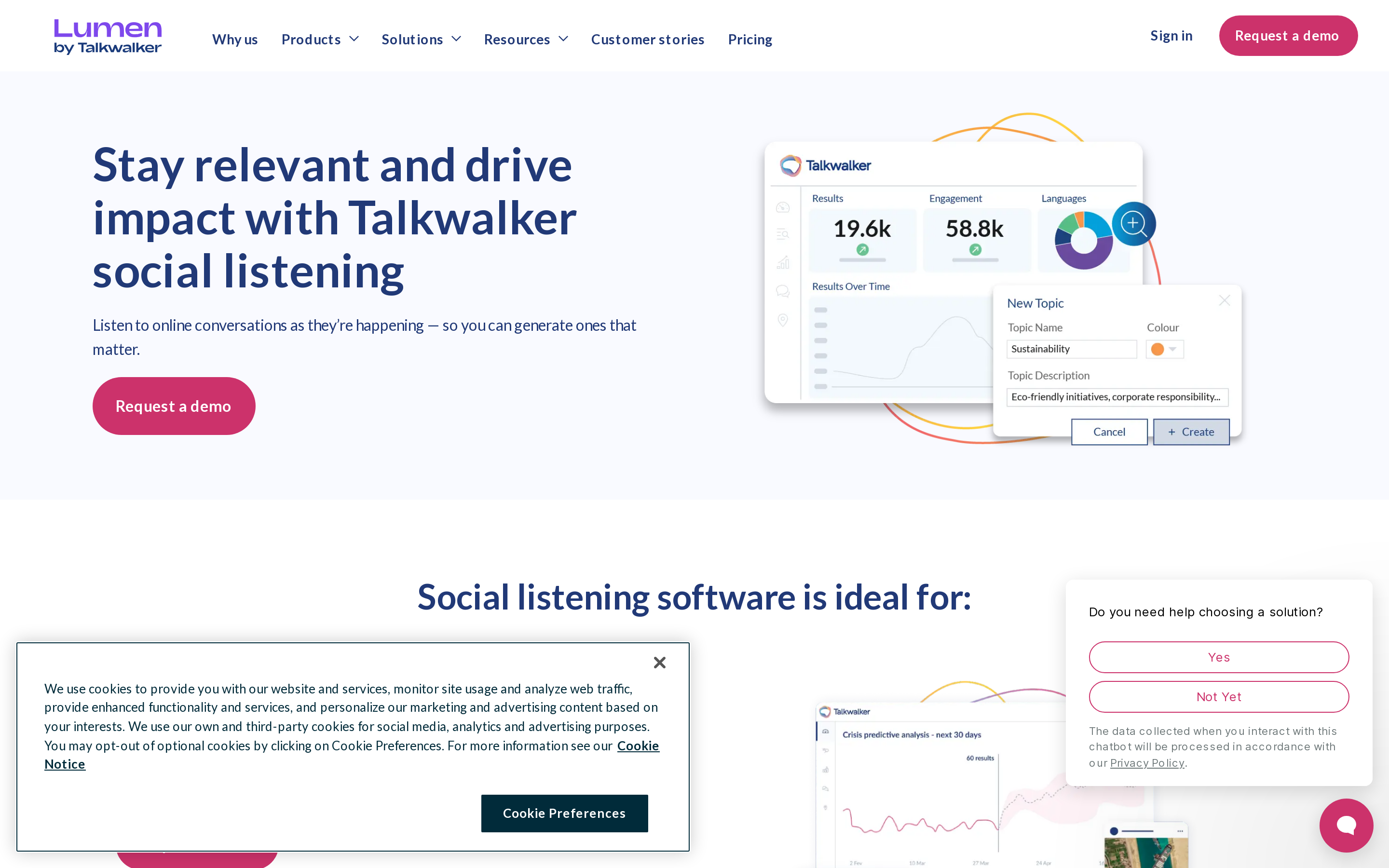
Talkwalker Alerts tracks news and blogs. It also checks forums and websites plus X. For delivery, Talkwalker can send a match by email, publish it through RSS, or pass it into Slack.
Its Boolean operators give it more query control than a plain Google Alert. The free product remains an alert service. It does not replace the dashboards and research depth inside Talkwalker's paid suite.
Features#
Web and X keyword alerts
Boolean query operators
Email and RSS delivery
Slack integration
Filters for source and language
Pricing: #
Access costs $0. It has no paid alert tier. A free trial does not apply because access does not expire. Talkwalker's full listening suite uses custom quotes and sits outside this free product.
Pros#
The free alert covers X as well as web sources.
Boolean operators help remove ambiguous matches.
Slack delivery can put alerts in a shared team queue.
Cons#
The alert product does not score buying intent.
It lacks the historical analysis in Talkwalker's paid listening suite.
Use this service when web and X monitoring must cost $0. Pick a paid listener when you need history or share-of-voice analysis.
#
4. F5Bot#
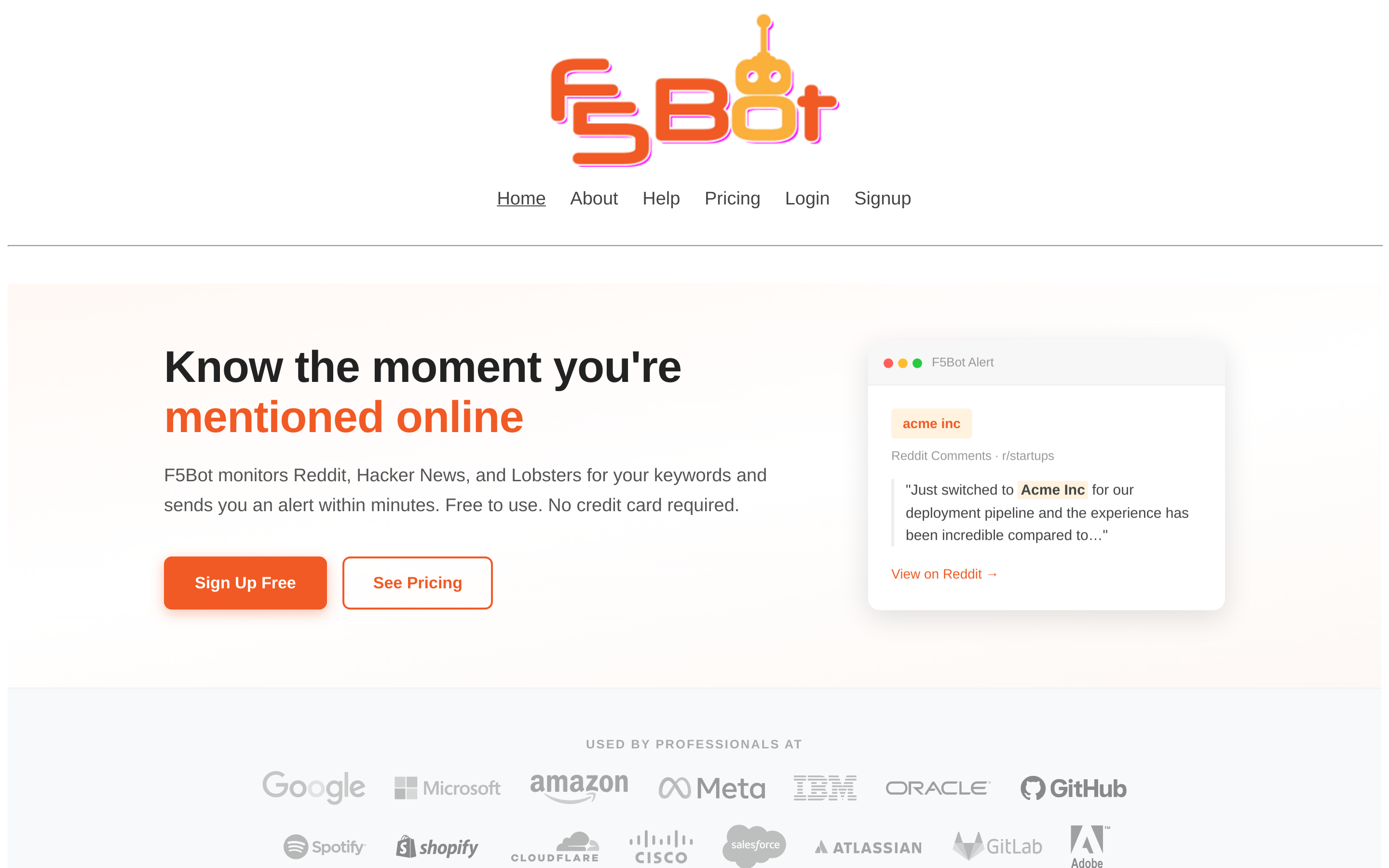
F5Bot watches Reddit and Hacker News plus Lobsters. It checks posts and comments. On the -e tier, F5Bot checks exact terms in posts, scans the comments, and sends a daily result set.
That narrow source list is useful for a technical founder. It is also the main limitation. A team watching LinkedIn or GitHub needs another tool.
Features#
Post and comment monitoring
Include and exclude flags
Email alerts
RSS and JSON on Gold
Slack and Discord on Gold
Pricing: #
Free costs $0 for five keywords with a ten-result daily cap per keyword. Silver costs $9.99 per month for 20 keywords. Gold costs $49.99 per month for 200 keywords and adds AI filtering. Diamond starts at $500 per month. A free trial is unnecessary because the $0 tier remains active.
Pros#
F5Bot watches comments as well as posts.
Include and exclude flags help with ambiguous brand terms.
Cons#
Coverage stops at Reddit and Hacker News plus Lobsters.
The free tier caps each keyword at ten results per day.
F5Bot fits one-person watchlists on Reddit or Hacker News. CommunityTracker becomes useful when the same buyer signal must reach a rep and carry response context.
5. Social Searcher#
Social Searcher combines live search with saved monitoring. It covers web pages and public posts from several networks. Inside each saved monitor, Social Searcher lets you filter by source, narrow by sentiment, and export the results for analysis.
The product works as a budget bridge between free alerts and a full listening suite. Its process focuses on finding and storing mentions. GTM routing remains manual.
Features#
Real-time searches
Saved monitoring projects
Sentiment filters
Email notifications
CSV and API access
Pricing: #
The free plan costs €0 for 100 daily searches and one monitor with 500 saved posts per month. Standard costs €8.49 per month and includes a 14-day trial. Professional costs €19.49 per month. Custom limits sit above those plans.
Pros#
The free plan includes one saved monitor.
Sentiment filters help narrow a stored result set.
CSV and API access support analysis outside the product.
Cons#
Source access varies by plan.
Intent scoring and sales routing are not the core process.
Social Searcher suits a small watchlist with a fixed budget. Choose it when saved results matter more than sales routing.
6. Syften#
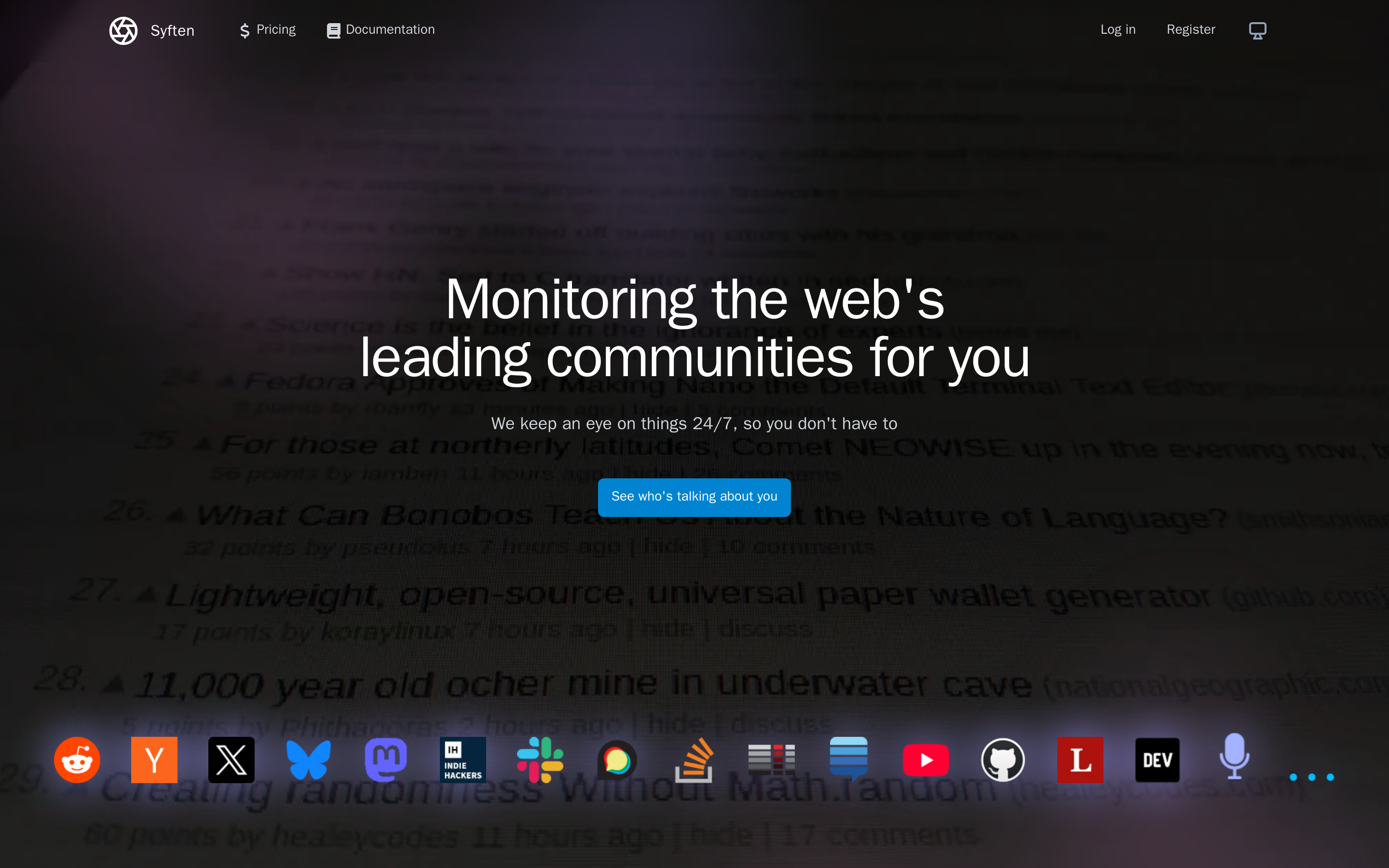
Syften monitors Reddit and Hacker News. It also covers X and Bluesky, plus Mastodon. Technical sources include GitHub and Stack Overflow. Slack communities and Discourse forums extend the watchlist.
You build filters for product names or pain phrases. When Syften finds a match, it can email the owner, post into Slack, or pass the event through an API or webhook.
Features#
Community and web filters
AI filtering on Standard
Slack integration
API access
Webhooks and MCP connections
Pricing: #
Entry costs $29.95 per month for three community filters and one web filter. Standard costs $49.95 per month. Pro costs $119.95 per month and adds unlimited archive search. A free trial runs for 14 days, needs no card and, shows up to 60 days of prior mentions.
Pros#
Coverage includes GitHub and Stack Overflow alongside Reddit and Hacker News.
Email and Slack delivery work for a shared watchlist.
Pro supports webhooks and MCP connections.
Cons#
Every published plan caps daily results.
X and YouTube access can require paid add-ons.
Entry retains only seven days of archive search.
Syften works for founders and DevRel teams that need fast technical community alerts. We unpack its narrow fit in our Syften review .
7. Octolens#
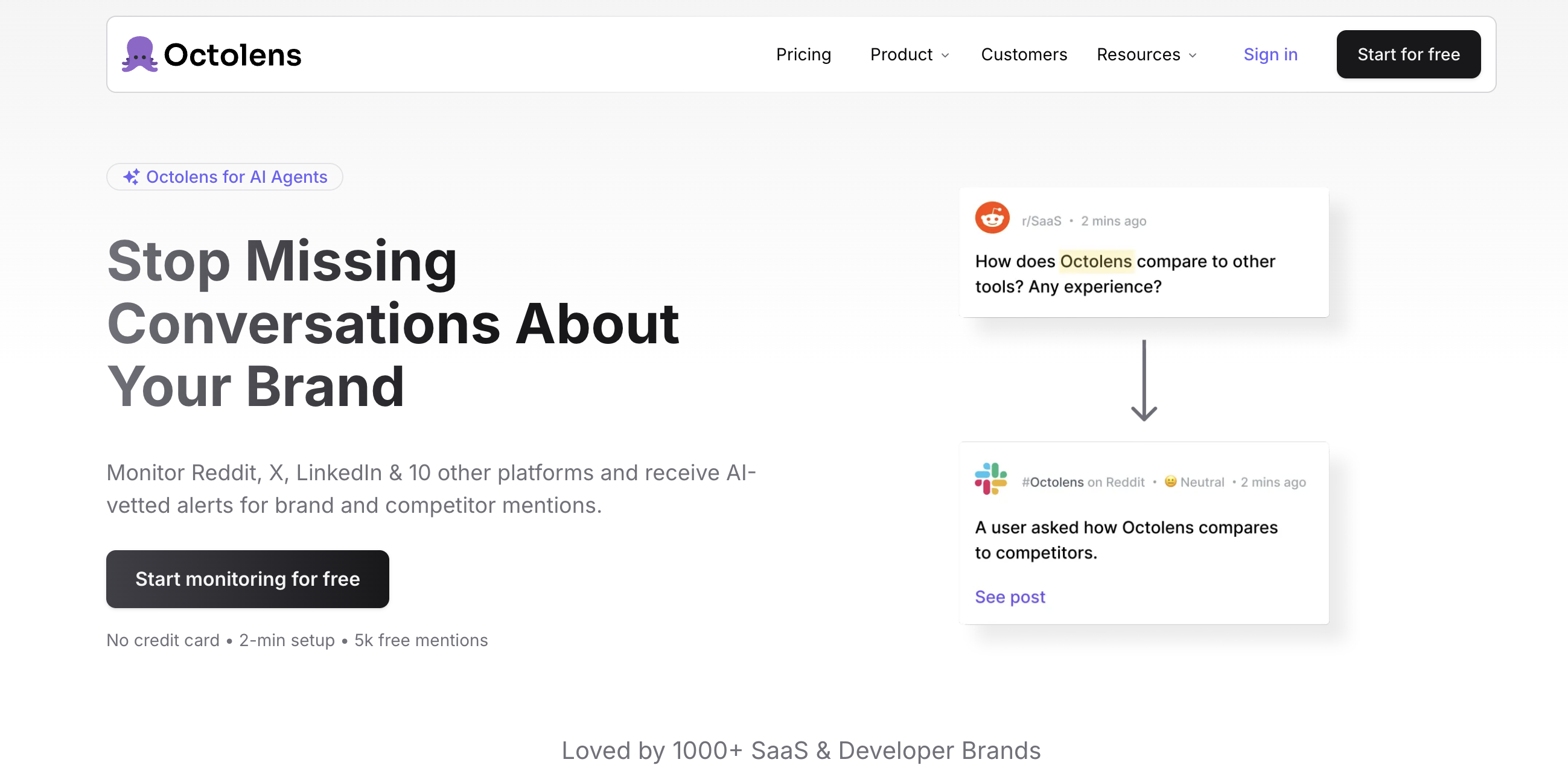
Octolens watches developer discussions and public web sources. Its delivery options include Slack and email. For a DevRel process, Octolens can send a mention to Slack, deliver it by email, or pass it into an internal system through its API or webhooks.
The product supports broad community coverage. Its own guidance notes that low-volume brands may not produce enough data for the filtering layer to show much value.
Features#
Keyword monitoring across developer sources
AI filters
Slack and email alerts
API and webhooks
Unlimited seats on published plans
Pricing: #
Published plans start at $49 per month. Pro costs $149 per month on monthly billing or $119 per month on annual billing for ten keywords and 15,000 mentions. Scale costs $399 per month. No free access is offered. A trial includes Pro for seven days. Enterprise offers unlimited mentions and keywords.
Pros#
API and webhooks support custom delivery.
Published plans include unlimited seats.
Cons#
There is no permanent free plan.
Low-volume brands may not produce enough data for the filtering layer.
The trial lasts seven days.
8. Awario#
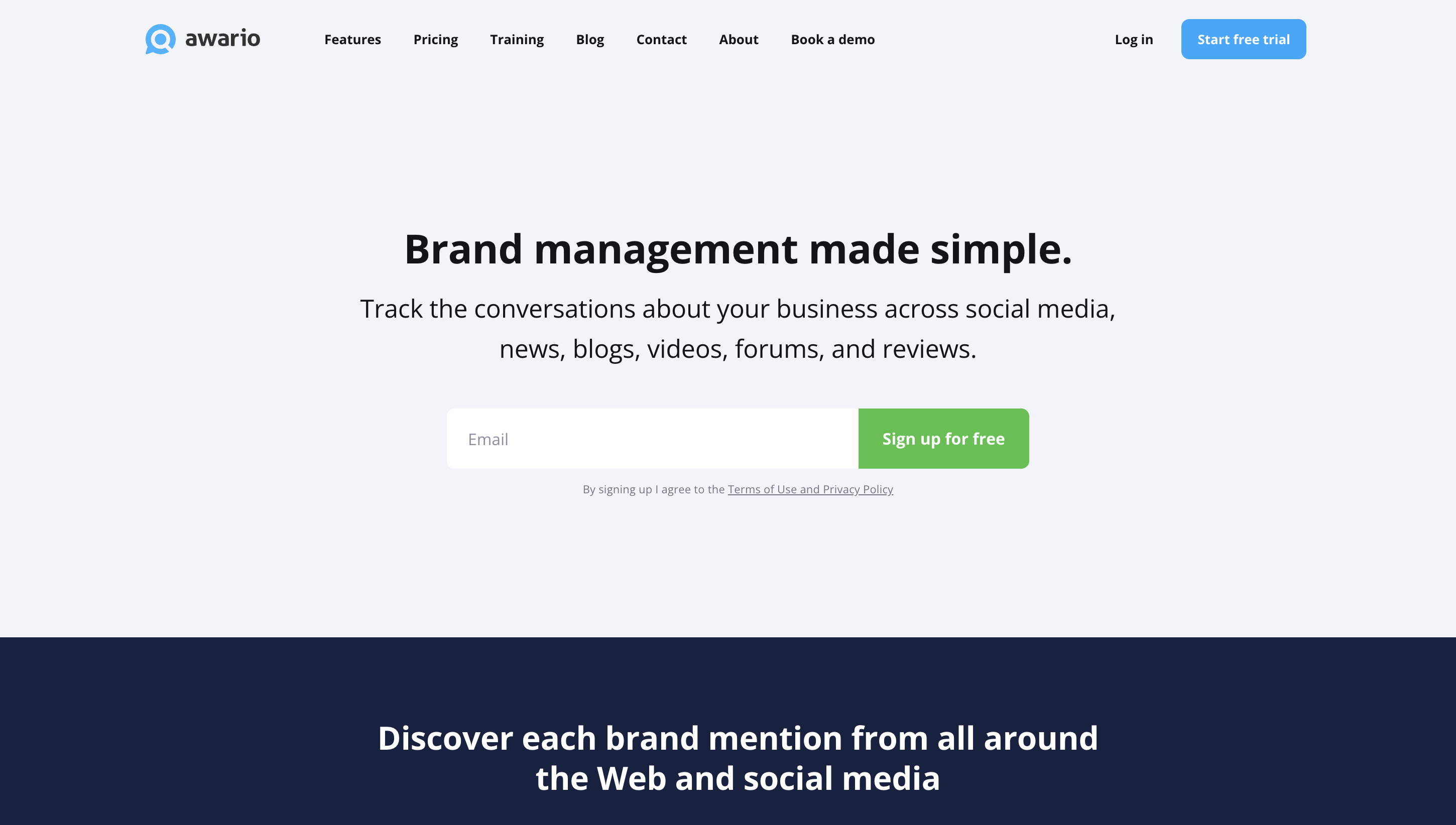
Awario tracks a topic as a keyword group. You can combine a brand name with exclusions and source rules. For each topic, Awario reports mention volume, estimates reach, and lets Pro users export the results for later analysis.
The product suits an analyst who wants query control without an enterprise contract. Mention caps and stored-result limits still require active query cleanup.
Features#
Unlimited keywords inside each topic
Boolean search
Mention and reach reports
CSV export
API on Enterprise
Pricing: #
Starter costs $49 per month or $29 per month on annual billing. It includes three topics and 30,000 new mentions per month. A free trial grants Starter access for seven days and requires no card. Pro costs $149 per month. Enterprise costs $399 per month and includes API access.
Pros#
Boolean search starts on the entry plan.
One topic can hold many keyword variants.
Published mention quotas make capacity planning easier.
Reach estimates add context to raw mention counts.
Cons#
Stored mentions are capped by topic.
API access is limited to Enterprise.
Insightful Read: Awario fits an SMB analyst who wants Boolean control and reports. Read our Awario review before comparing its mention quota with your query volume.
9. Mentionlytics#
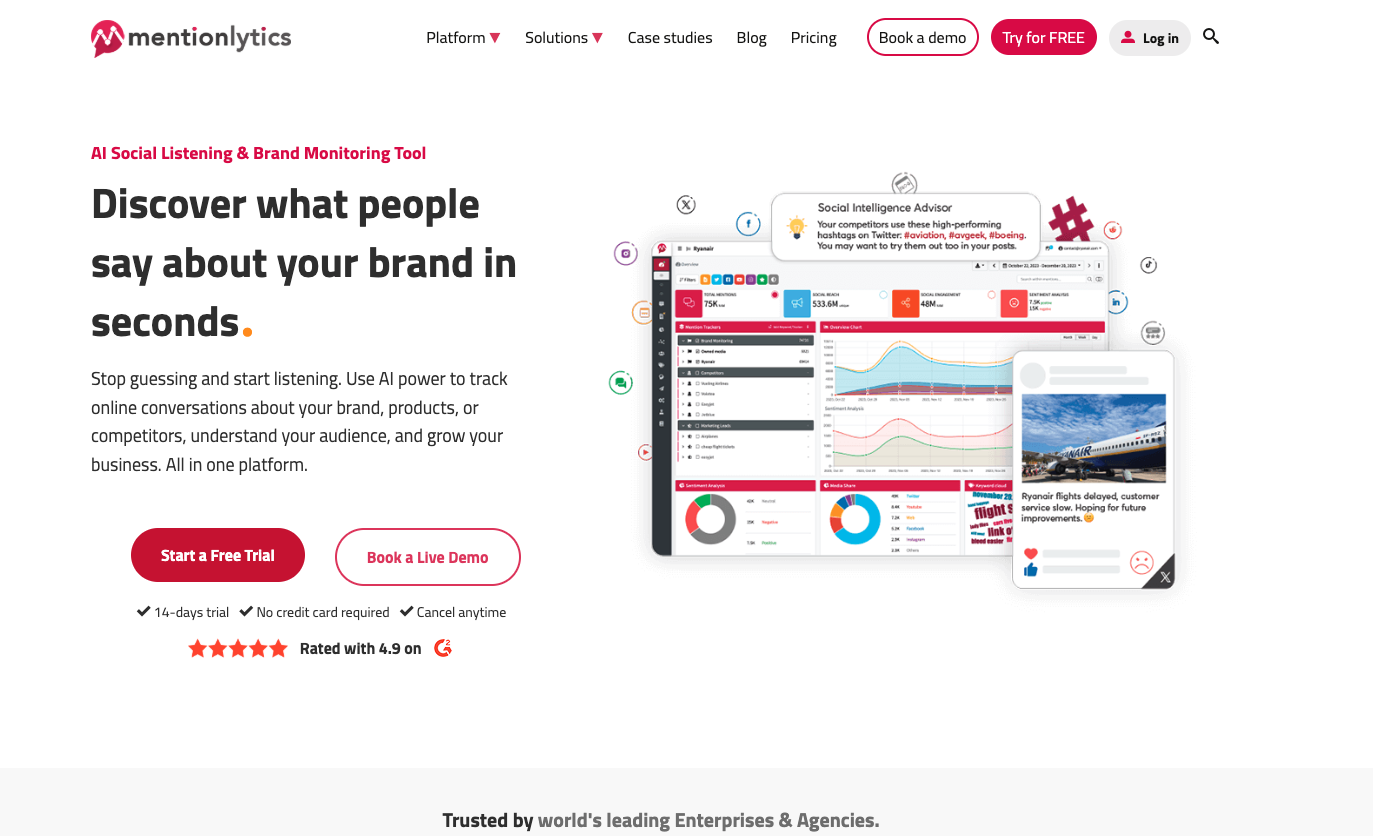
Mentionlytics scans web sources and public network posts. Across a monitoring project, Mentionlytics tracks keywords, follows owned profiles, and reports sentiment plus share of voice.
Its trial gives enough capacity to test a focused set of brand and competitor terms. The monthly price rises as mention volume and reporting needs grow.
Features#
Web and social source monitoring
Multilingual sentiment analysis
Competitor and share-of-voice reports
Profile tracking
Team access
Pricing: #
Basic costs $69 per month for 5,000 mentions. Essential costs $169 per month. Advanced costs $299 per month. Pro costs $499 per month, while Enterprise costs $1,299 per month. No free tier is offered. A trial runs for 14 days and supports up to three keywords and 5,000 mentions on the pricing page. No free access remains.
Pros#
Multilingual sentiment supports monitoring across languages.
Share-of-voice reports suit brand and agency analysis.
Cons#
Monthly mention quotas force an upgrade as volume grows.
Review monitoring can require an add-on.
The product analyzes mentions but does not route buyer questions to a sales owner.
Mentionlytics works for teams that need sentiment and recurring reports. It beats CommunityTracker when the job is broad brand analysis instead of a sales response.
10. BrandMentions#
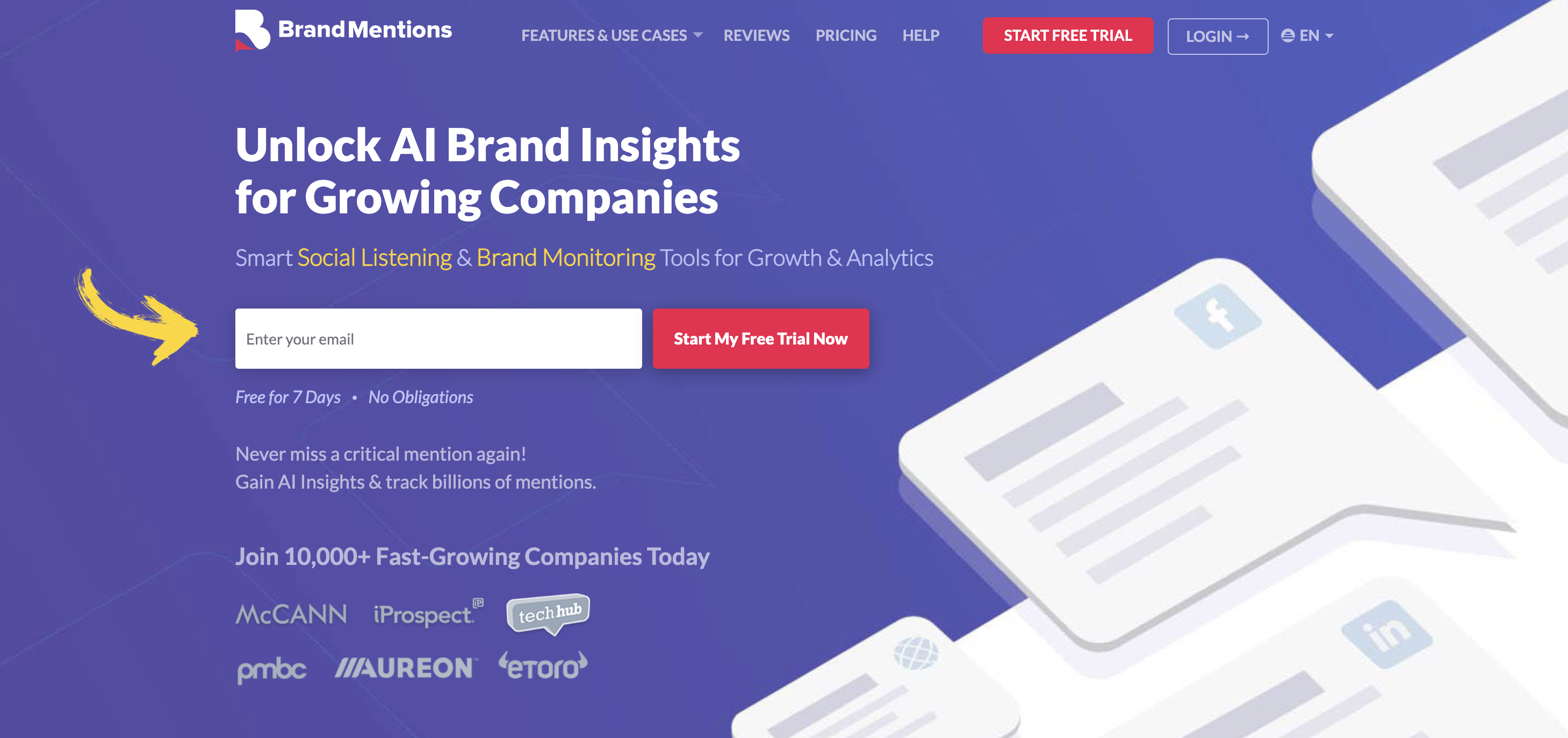
BrandMentions scans web pages and public posts for tracked keywords. It adds sentiment and reports. For agency delivery, higher BrandMentions plans add scheduled reports, white-label output, and Boolean queries.
The reporting ladder makes sense for agencies. A founder who only needs one buyer alert pays for more reporting than the process needs.
Features#
Web and public network monitoring
AI sentiment
Scheduled reports
White-label output on Expert
API and Boolean search on Enterprise
Pricing: #
Starter costs $99 per month and bills quarterly. It includes five keywords and 5,000 mentions per month. A free trial runs for seven days before converting. Pro costs $299 per month. Expert costs $499 per month. Enterprise starts at $1,299 per month and gates API access.
Pros#
Scheduled reports support recurring client delivery.
White-label output lets agencies present reports under their own brand.
Sentiment analysis sits beside web and public-post monitoring.
Cons#
The product centers on reports rather than GTM response routing.
A simple one-keyword watchlist does not use much of the agency reporting layer.
BrandMentions fits an agency that bills for monitoring reports. Smaller teams should test whether Social Searcher or Awario covers the same watchlist for less.
11. Brand24#
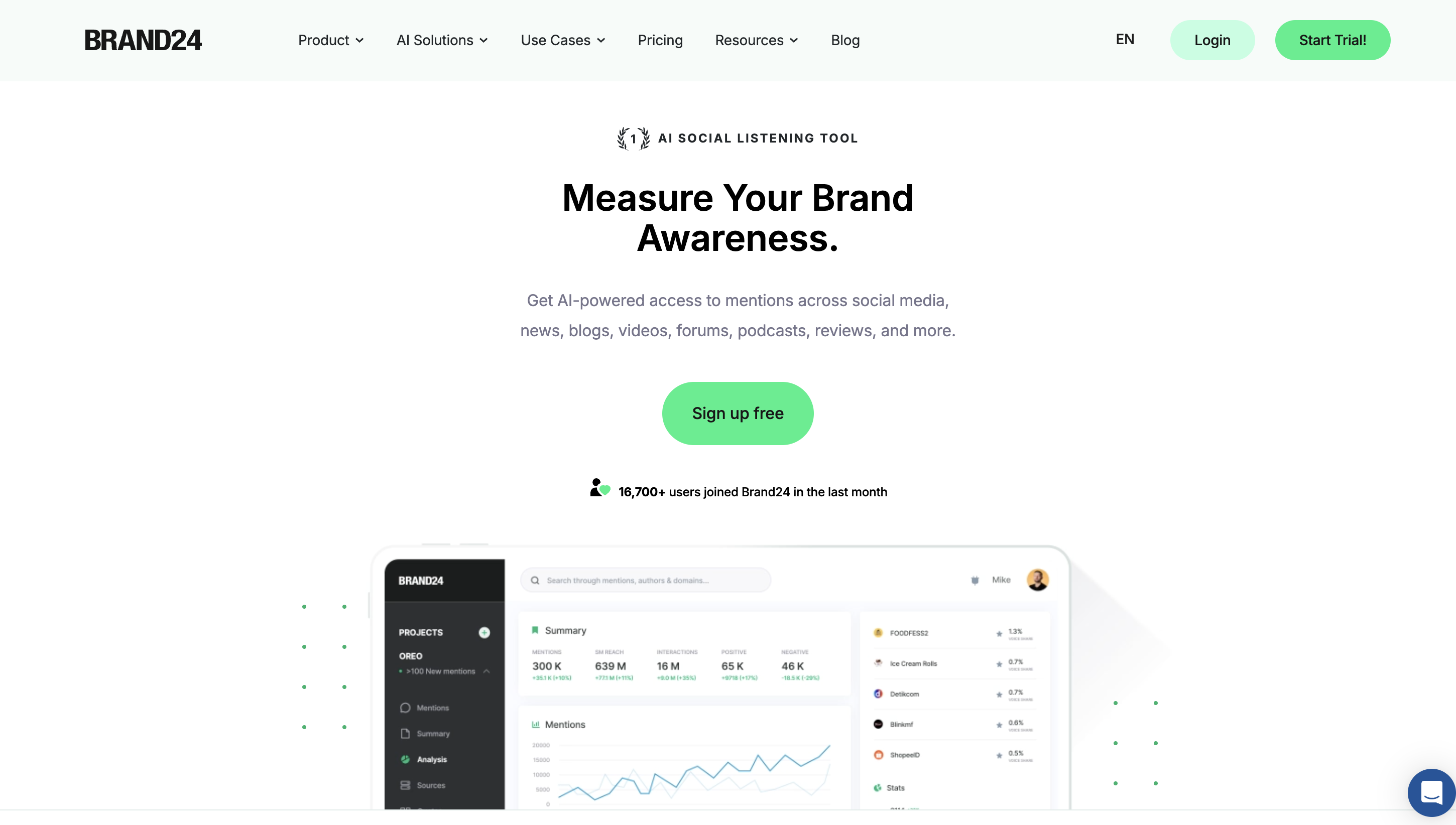
Brand24 collects keyword mentions from public web and network sources. Inside each project, Brand24 groups related mentions, maps sentiment and reach, and adds event detection.
Brand24 groups each query into a project with reach charts, sentiment views, and scheduled reports. The Individual plan refreshes those project results every 12 hours. That delay matters when a complaint or buyer question needs a same-day response.
Features#
Keyword projects
Sentiment analysis
Mention reach and influence metrics
Event detection
Reports and team access
Pricing: #
Individual costs $249 per month or $199 per month on annual billing for three keywords and 2,000 mentions. Team costs $349 per month. Pro costs $499 per month. There is no free account. A trial mirrors Pro for 14 days with ten keywords and 30,000 mentions.
Pros#
Sentiment and reach views help analysts interpret mention volume.
Event detection can reveal sudden changes in discussion.
The trial includes ten keywords and 30,000 mentions.
Published quotas make usage limits clear before purchase.
Cons#
The Individual plan refreshes every 12 hours.
Its 2,000-mention monthly cap is easy to exceed on a busy brand term.
Its project view focuses on analysis instead of leads.
Also Read: Brand24 vs Hootsuite: Which Tool Should You Choose in 2026?
12. Mention#
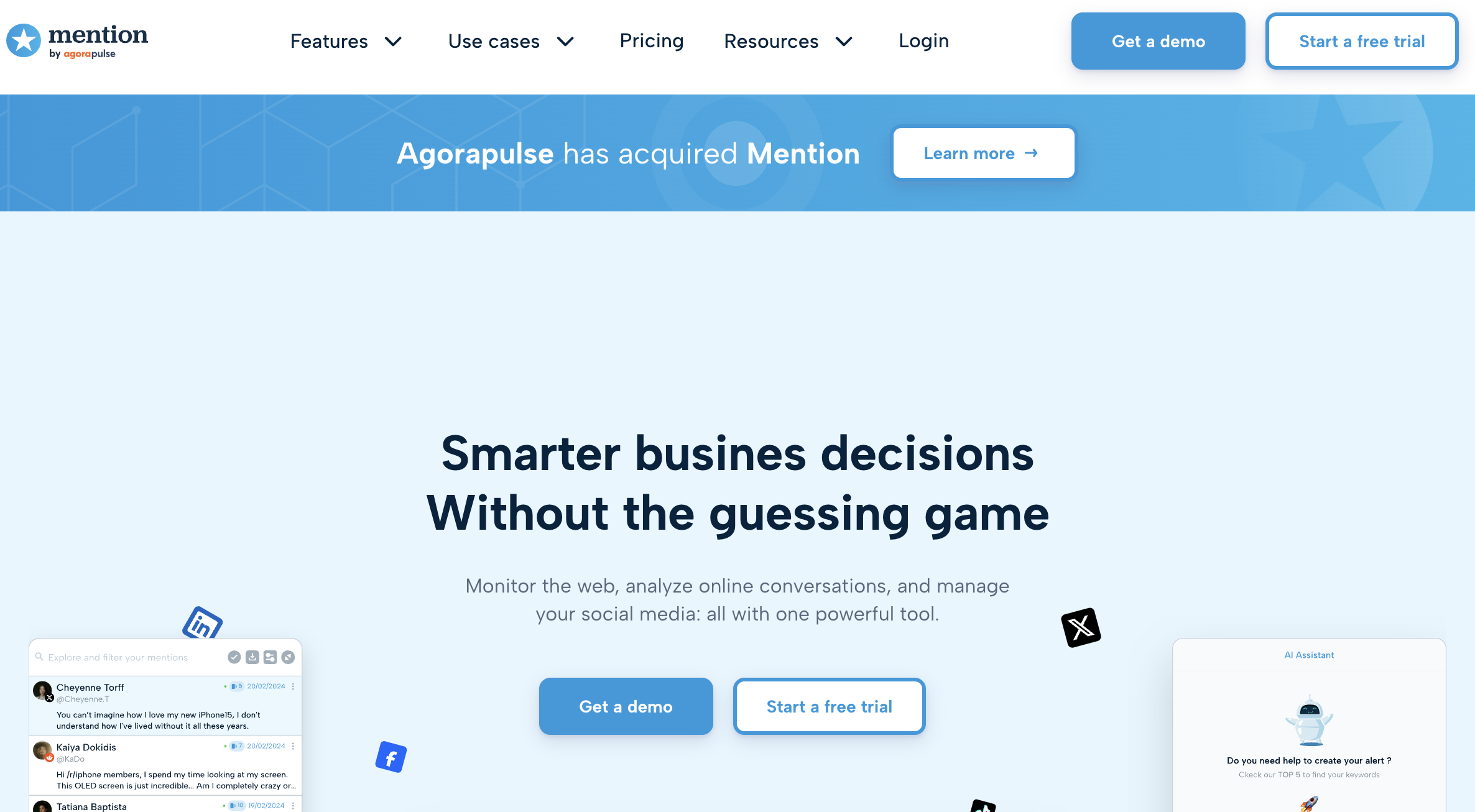
Mention scans X and Reddit plus the public web. It also covers news and blogs plus forums. With an advanced alert, Mention can apply Boolean rules, assign a match to a teammate, and include the result in scheduled reports.
The current offer targets companies that need a managed listening program. A small team loses the old self-serve ladder and starts with an annual contract.
Features#
Five alerts on the Company plan
50,000 monthly mentions
Boolean queries
Team assignment
Scheduled reporting and data export
Pricing: #
Company starts at $599 per month on an annual contract. A free trial is available and becomes view-only when it ends. The plan includes five alerts and 50,000 monthly mentions. Historical data and API access can require paid add-ons. Mention publishes no free tier or higher self-serve tier.
Pros#
Team assignments give each mention an owner.
Boolean alerts support complex brand terms.
Scheduled reports and export suit an established intelligence team.
Cons#
Historical data can require an add-on.
API access can require an add-on.
The current offer starts with an annual contract.
Five alerts leave little room for separate product and competitor queries.
13. Hootsuite#
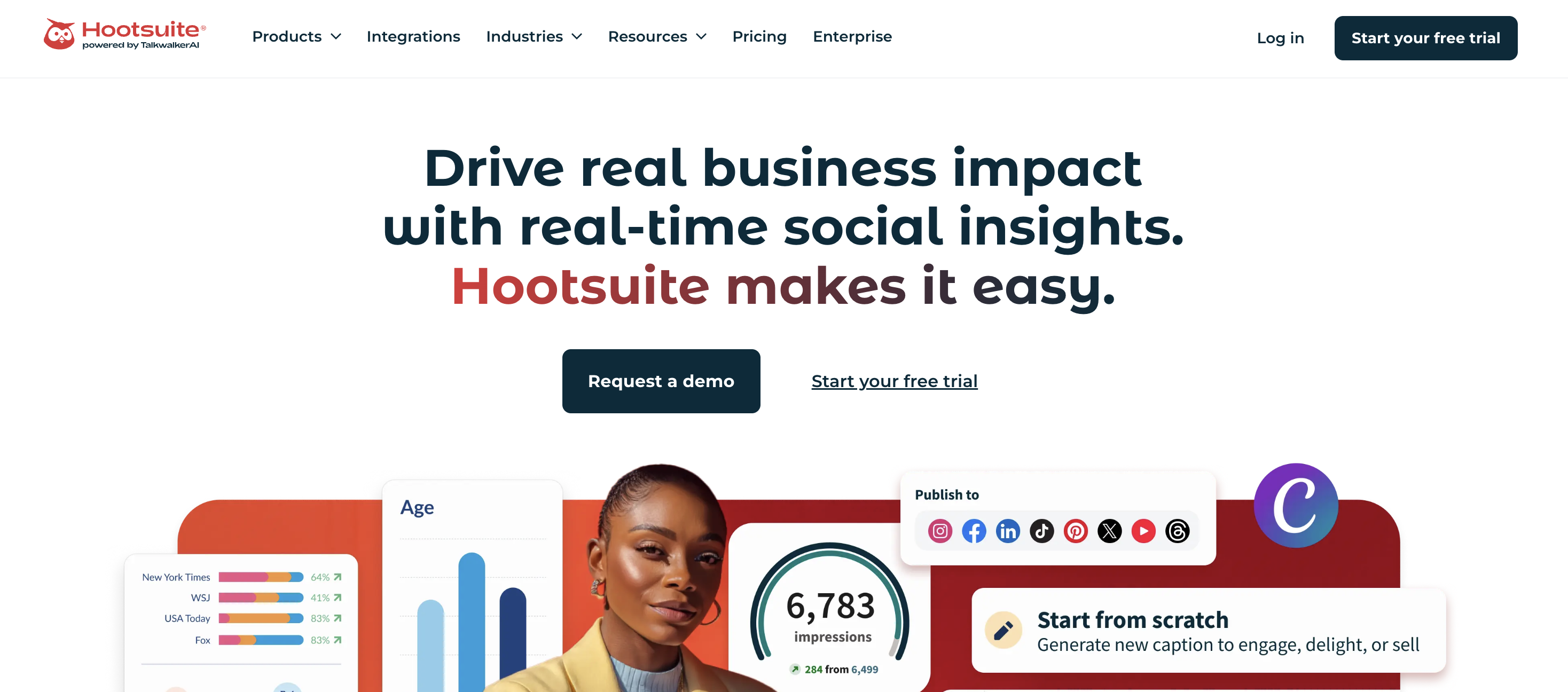
Hootsuite combines scheduling and inbox work with listening. Across its plan ladder, Hootsuite searches recent brand mentions, extends quick-search history, and adds deeper Talkwalker listening for enterprise teams.
This combination helps a social team that already publishes through Hootsuite. It adds cost and breadth for a GTM team that only needs community buyer signals.
Features#
Keyword and mention search
Sentiment analysis
Competitor benchmarking
Publishing calendar
Shared inbox and routing
Pricing: Standard starts at $99 per month. A trial runs for 30 days with daily posting caps and no card. Advanced adds longer mention search and process controls. Enterprise uses a custom quote and gates the deepest Talkwalker listening. No free subscription follows the trial.
Pros#
Publishing and listening share one workspace.
A shared inbox gives public replies an owner.
Standard includes seven days of quick-search history.
Advanced adds routing and approval controls.
Cons#
Full Talkwalker listening depth sits in Enterprise.
Quick-search history stops at seven days on Standard and 30 days on Advanced.
A signal-only team may pay for publishing functions it does not use.
14. Sprout Social#
Sprout Social brings keyword and location monitoring into its social operations suite. Once a monitored post reaches the shared inbox, Sprout can assign the reply, apply tags, and add deeper sentiment tools.
Per-seat billing shapes the buying decision. One analyst may justify the entry plan. A large response team multiplies the cost before listening add-ons.
Features#
Keyword and location monitoring
Shared inbox
Review management
Competitor reports
API and helpdesk integrations on Advanced
Pricing: #
Standard costs $199 per seat per month on annual billing. Professional costs $299 per seat per month. Advanced costs $399 per seat per month. No free account follows the 30-day Professional trial. The trial needs no card. Enterprise gates custom scope.
Pros#
The shared inbox helps response teams assign public messages.
Review management sits beside profile monitoring.
Professional adds competitor reports.
Cons#
Deep listening can require a separate purchase.
Standard covers five profiles.
Sprout fits a social operations team with clear inbox ownership. It is harder to justify for a lean GTM team that only needs keyword alerts.
15. BuzzSumo#
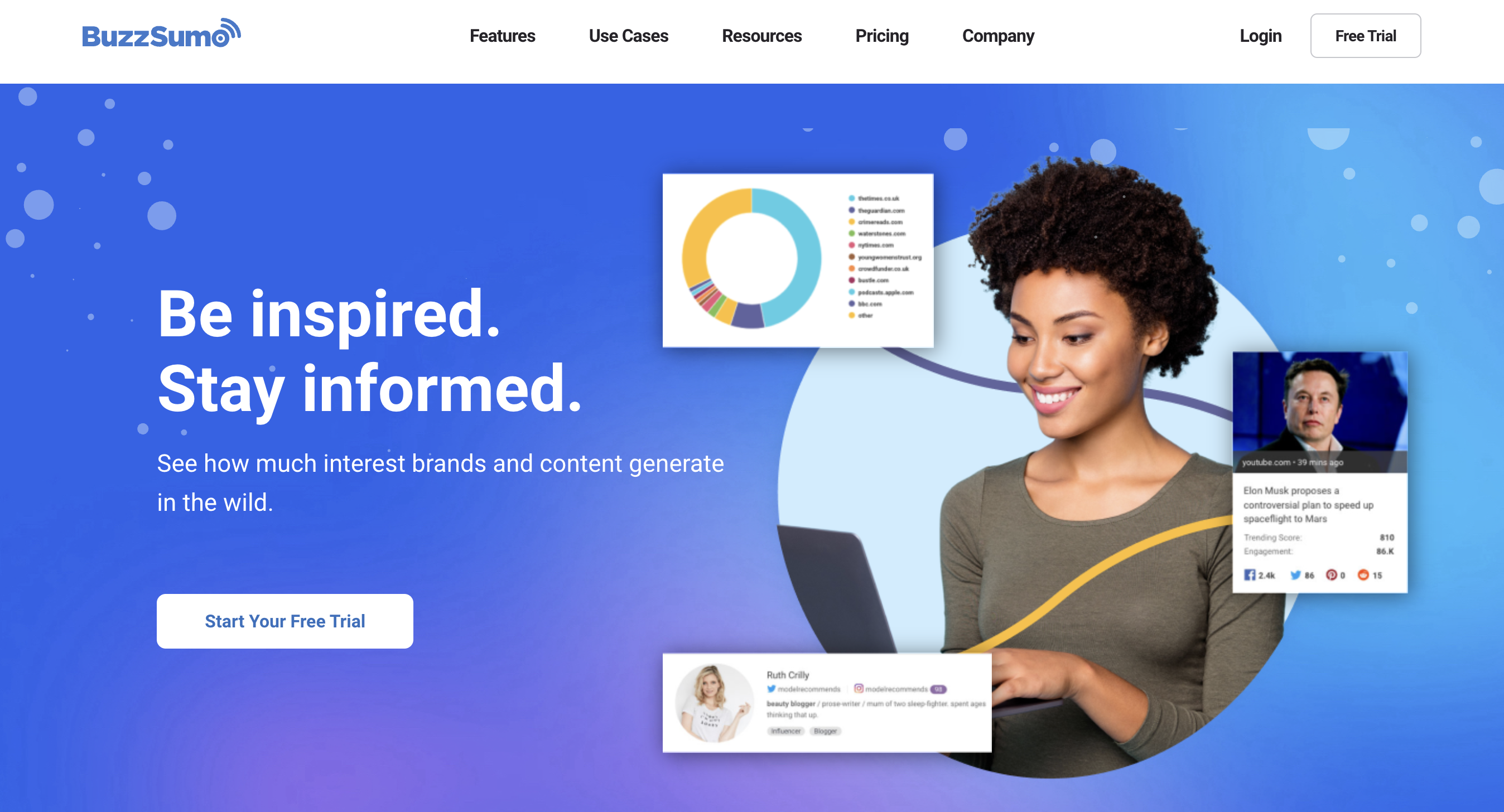
BuzzSumo tracks articles and media mentions around a topic. For a content team, BuzzSumo surfaces new coverage, tracks brand mentions, and uses its archive to show which stories gained attention.
This focus differs from community buyer-signal tracking. BuzzSumo supports editorial research and PR. It does not own a rep's next move after a prospect asks for an alternative.
Features#
Topic and brand alerts
Content performance research
Media mention monitoring
Trend discovery
Multi-year article archive
Pricing: #
Content Creation starts at $199 per month on annual billing. PR and Comms also start at $199 per month. Suite costs $399 per month on annual billing. Enterprise costs $999 per month. No free tier remains. A trial runs for seven days and allows 50 searches.
Pros#
Combines content research and mention monitoring in one searchable archive.
Multi-year content history makes it easier to spot long-term trends and recurring topics.
PR-focused features help teams track media coverage, research journalists, and monitor brand mentions.
Cons#
Not built primarily for routing and responding to community conversations in real time.
The seven-day trial is restrictive, with searches limited to 50.
BuzzSumo fits a content or PR team that monitors stories and coverage. Choose a community-intelligence product when the monitored phrase needs to become a sales action.
Which keyword monitoring tool should you choose?#
For free indexed-web coverage, pick Google Alerts.
When free X monitoring matters, use Talkwalker Alerts.
A Reddit or Hacker News watchlist fits F5Bot.
Technical community alerts with API delivery point to Syften or Octolens.
Broad listening reports fit Awario or Mentionlytics.
A social publishing team gets more from Hootsuite.
A GTM team that needs intent scoring and response routing should start with CommunityTracker.
Run one test before you buy. For a useful trial, create one brand query that catches direct mentions, one competitor query that exposes switching intent, and one pain-phrase query that finds buyers who describe the problem without naming a product.
Over seven days, review every match, mark the ones that deserved action, and record whether they arrived in time. Count how many results deserved action and how many arrived before the moment passed. The answer tells you whether you need more sources or better filtering.
Start with one keyword that matters#
You do not need a paid social listening platform to start monitoring mentions. Google Alerts and Talkwalker Alerts work well for basic web monitoring, while Brand24 and Mentionlytics are better suited to teams that need deeper reporting and trend analysis. Hootsuite makes more sense when social publishing and monitoring need to live in the same workflow.
CommunityTracker is a stronger fit when the goal is to find conversations your team can act on, such as product questions, competitor complaints, and requests for alternatives across Reddit and its other supported sources.
Also, once a relevant prospect is identified, your team can continue the outreach through LinkedIn or email instead of treating the mention as a standalone alert. That makes it more useful for teams that want to turn social signals into actual conversations and pipeline.
A simple way to test it is to start with one Reddit keyword on the free plan. Review the results for a week and see how many conversations are genuinely worth responding to. If the signal quality is useful, expand into more keywords, platforms, and LinkedIn or email outreach from there.