Gojiberry already does a lot in one place. It finds people showing buying intent, checks whether they fit your ICP, finds their contact details, and reaches out through LinkedIn or email.
But that does not mean it will fit every GTM motion.
You may want to track conversations happening across Reddit and other communities. You may care more about people visiting your website. Or you may already have outreach tools in place and only need a better way to find the right prospects at the right time.
That is where Gojiberry alternatives start to look very different from each other.
In this guide, I compared eight options based on what they are actually best at, how they find potential buyers, what happens after they find them, and where each one makes more sense than Gojiberry.
TL;DR: Which Gojiberry alternative should you choose?#
The right alternative depends on where your buying signals come from and how much of the path from signal to outreach you want the tool to handle.
Choose CommunityTracker if you want social listening, buyer-intent detection, contact enrichment, and LinkedIn or email outreach across 11 social, community, and developer sources.
Choose Valley if LinkedIn engagement is your main intent source and you want qualification plus native LinkedIn and email follow-up from one connected sender.
Choose Unify if your signals come from multiple places such as CRM, website activity, hiring, product usage, and third-party data, and you want to orchestrate outbound from one system.
Choose Trigify if you want social-signal discovery and routing but prefer to keep your existing CRM, sequencer, or sending infrastructure.
Choose Common Room if you need to combine product, website, CRM, community, and other signals into a richer person or account-level model for a larger GTM team.
Choose RB2B if website visitor identification is the main job and you want to turn high-intent visits into sales alerts or outbound actions.
Choose Warmly if qualified website traffic already drives pipeline and you want visitor identification, routing, chat, email follow-up, and inbound automation around it.
Choose Clay if you want maximum control over enrichment, research, scoring, and custom GTM workflows rather than a predefined signal-to-outreach system.
Stay with Gojiberry if its behavioral signals, enrichment, LinkedIn outreach, email outreach, and reply handling already cover your motion well.
Consider switching when you need broader social and community coverage, stronger website or first-party intent, deeper account intelligence, or more control over how signals are enriched, routed, and acted on.
Why teams move beyond Gojiberry#
Gojiberry already covers most of the outbound workflow. It finds buying signals, checks prospects against an ICP, enriches contact details and moves them into LinkedIn or email outreach.
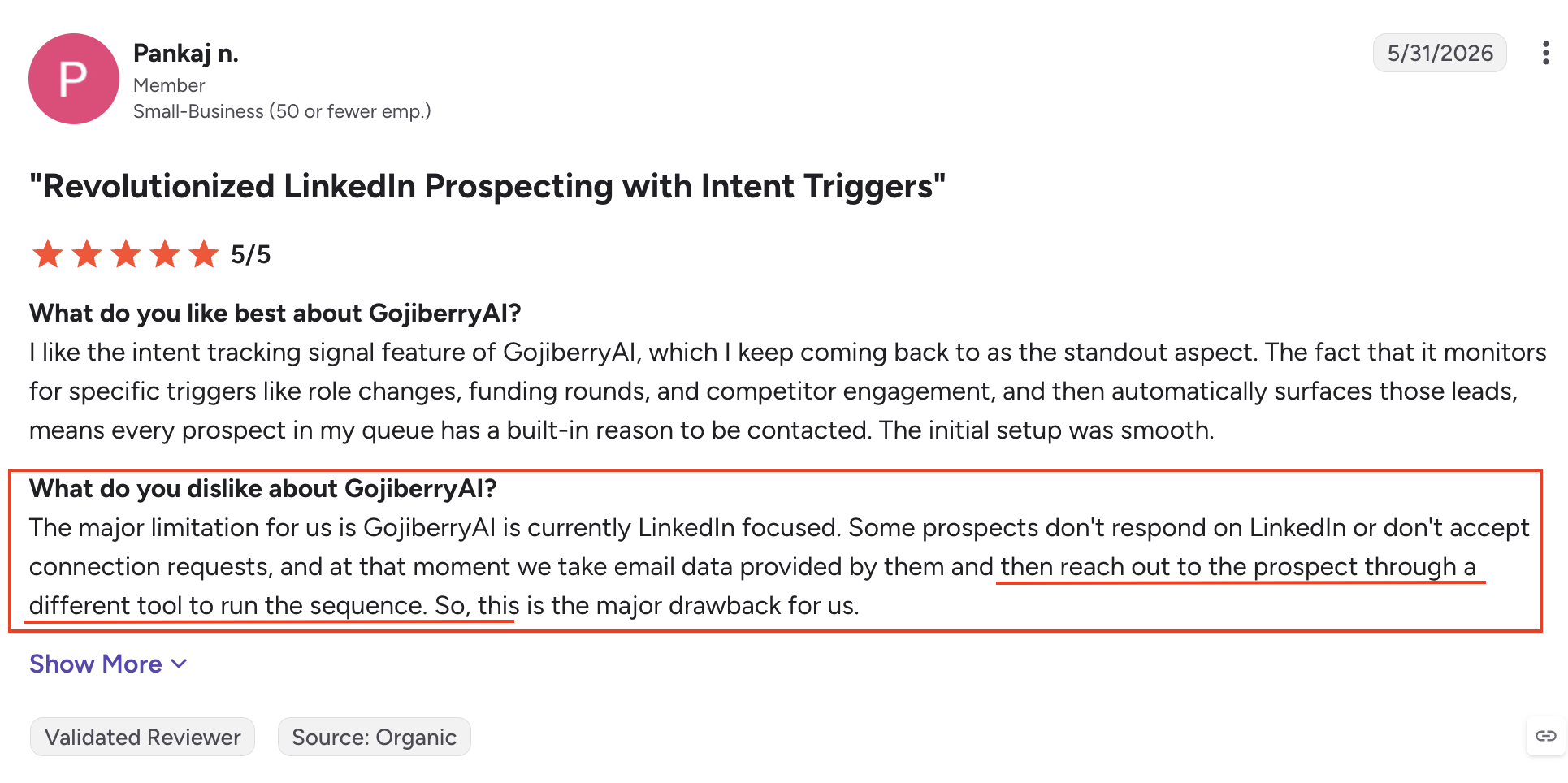
The limitation is that buying intent does not always show up in the same place. Sometimes LinkedIn activity is enough. In other cases, stronger signals come from Reddit discussions, website visits or product activity.
Users generally value Gojiberry for giving each prospect a clear reason to be contacted, but LinkedIn-heavy workflows can become restrictive when prospects do not engage there or when outreach needs to continue elsewhere.
That is why the alternatives below are better compared by where they find intent and what they let you do next.
How I evaluated these Gojiberry alternatives#
I compared each tool based on the full path from finding a potential buyer to actually reaching out: where the signal comes from, how the prospect is qualified, whether contact details can be found, how much useful information reaches the rep, and what happens next.
The better option depends on where your best buying signals appear and how much of the workflow you want the tool to handle.
Signal origin: Does intent begin with a conversation, LinkedIn behavior, a website visit, product usage, CRM history, or custom data?
Qualification and identity: Can the tool score ICP fit and resolve the event to a useful person or account before spending enrichment credits?
Context retention: Does the rep see the original reason the prospect surfaced, or only a name and score?
Outreach path: Can it start LinkedIn and email natively, or does the record need a connected sender?
Operating cost: What plan unlocks the useful workflow, and which traffic, credit, seat, or implementation constraint changes the economics?
Gojiberry alternatives Quick Comparison#
Tool | Social / community intent | Website / first-party intent | Intent scoring | LinkedIn + email outreach | Best for | Paid from |
GoJiberry | ✓ | ◐ | ✓ | ✓ | Behavioral signals + automated outreach | $99/mo |
CommunityTracker | ✓ | — | ✓ | ✓ | Social listening + buyer conversations + multi-channel outreach | $39/mo |
Unify | ◐ | ✓ | ✓ | ✓ | Multi-source GTM orchestration | $20/seat/mo |
Trigify | ✓ | ◐ | ✓ | ◐ | Social signals routed into your existing stack | $40/mo |
Common Room | ✓ | ✓ | ✓ | ◐ | Combining product, CRM, web, and community signals | $2,500/mo * |
RB2B | — | ✓ | ◐ | ◐ | Website visitor identification | $79/mo |
Valley | ◐ | — | ✓ | ✓ | LinkedIn intent + outbound | $199/mo |
Warmly | ◐ | ✓ | ✓ | ◐ | Website intent + inbound activation | $10k/yr |
Clay | ◐ | ✓ | ◐ | ◐ | Custom enrichment and GTM workflows | $185/mo |
* Annual commitment.
1. CommunityTracker: start with a current public buying conversation#
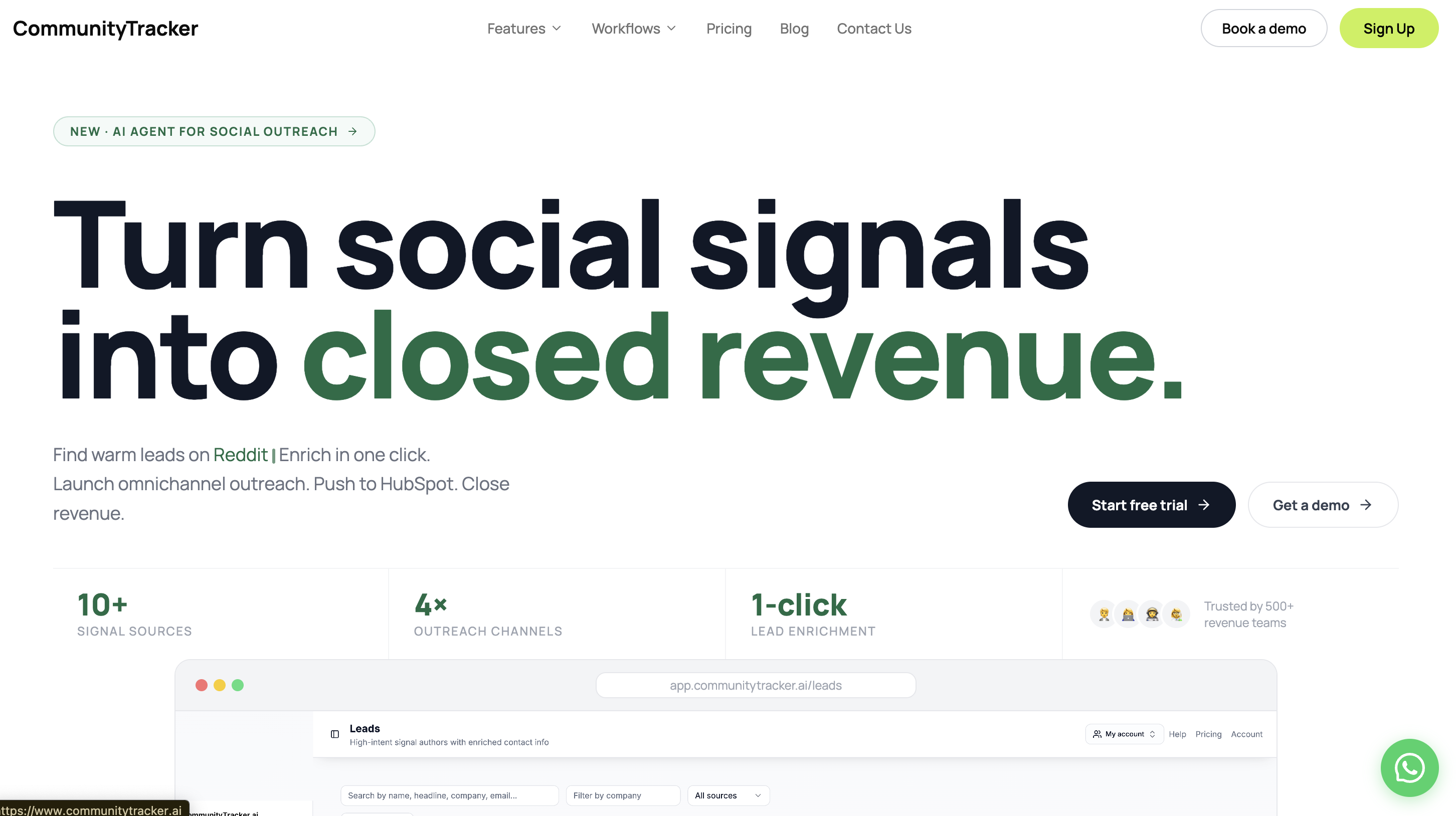
CommunityTracker preserves conversation-level signals through LinkedIn and email follow-up.
CommunityTracker is one of the closer Gojiberry alternatives if you want to find buying signals from public conversations, not just from LinkedIn activity.It monitors Reddit, LinkedIn, X, Bluesky, Hacker News, Indie Hackers, Dev.to, Stack Overflow, Product Hunt, GitHub and Slack.
That makes it useful when potential buyers are asking for recommendations, comparing tools, complaining about competitors or discussing a problem your product solves.
Once a relevant conversation appears, CommunityTracker filters out weak matches and scores the signal for intent. It can also enrich available contact details so you can follow up through email or LinkedIn without losing the reason the prospect surfaced in the first place.
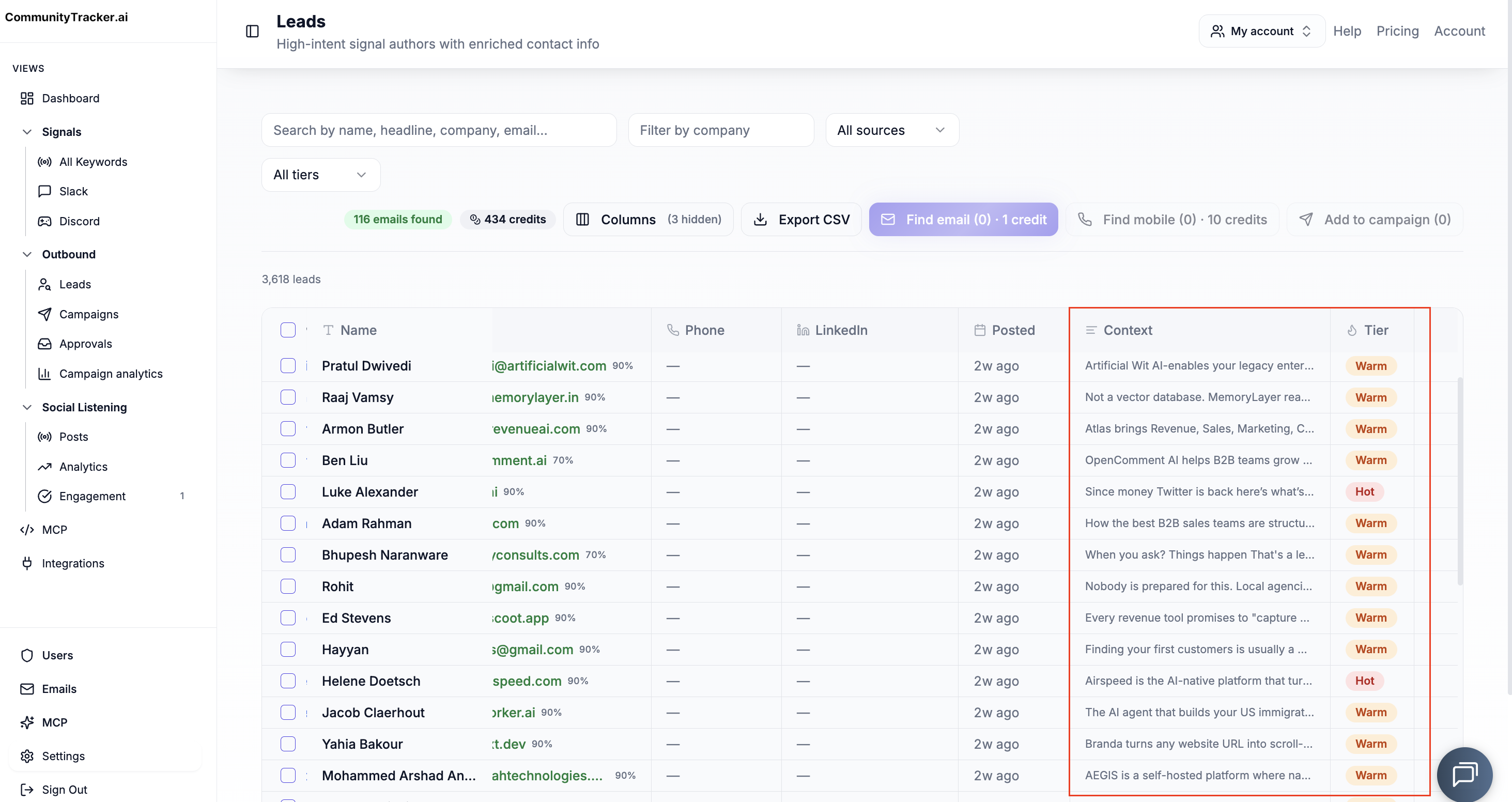
Gojiberry is stronger when the motion is centered around LinkedIn-led prospecting and automated campaigns. CommunityTracker goes wider on social listening and community signals, then connects those conversations to outreach.
Key features:#
Tracks social signals tied to keywords, competitor mentions, problems, and recommendation requests.
Scores intent and filters irrelevant matches before they reach a rep.
Preserves the source post as outreach context.
Enriches available person and company details, including work emails.
Starts outreach through email or LinkedIn from the identified signal.
Sends daily Slack alerts on Pro.
Pricing: #
Free costs $0 for one keyword, limited mentions, Reddit tracking, and daily alerts.
Starter costs $39 per month for four keywords and 5,000 mentions across Reddit, LinkedIn, Hacker News, and GitHub.
Pro costs $99 for ten keywords, unlimited mentions, all eleven platforms, unlimited warm emails, AI scoring, and Slack alerts. Advanced costs $199 for twenty keywords plus Share-of-Voice Exporter and AI visibility. Annual billing is contact.
Pros#
Keeps the original post attached to the prospect, so a rep can respond to the stated problem instead of a generic score.
Extends signal coverage beyond LinkedIn into Reddit, X, Hacker News, GitHub, and other named sources where buyers discuss problems publicly.
Filters weak mentions before enrichment, which reduces spend on commentary and support questions that do not warrant outreach.
Carries the same conversation into LinkedIn or email follow-up without stripping away why the person surfaced.
Cons#
Signal volume depends on buyers discussing the problem publicly.
It does not combine product telemetry or CRM history into an account model.
It is not a publishing or social scheduling suite.
Who should choose it#
Choose CommunityTracker when the original public conversation matters and the team wants that context to continue into LinkedIn or email outreach.
Our guide to B2B buying signals that predict revenue separates events worth a sales action from activity that only creates noise.
2. Valley: qualify and contact LinkedIn engagers#
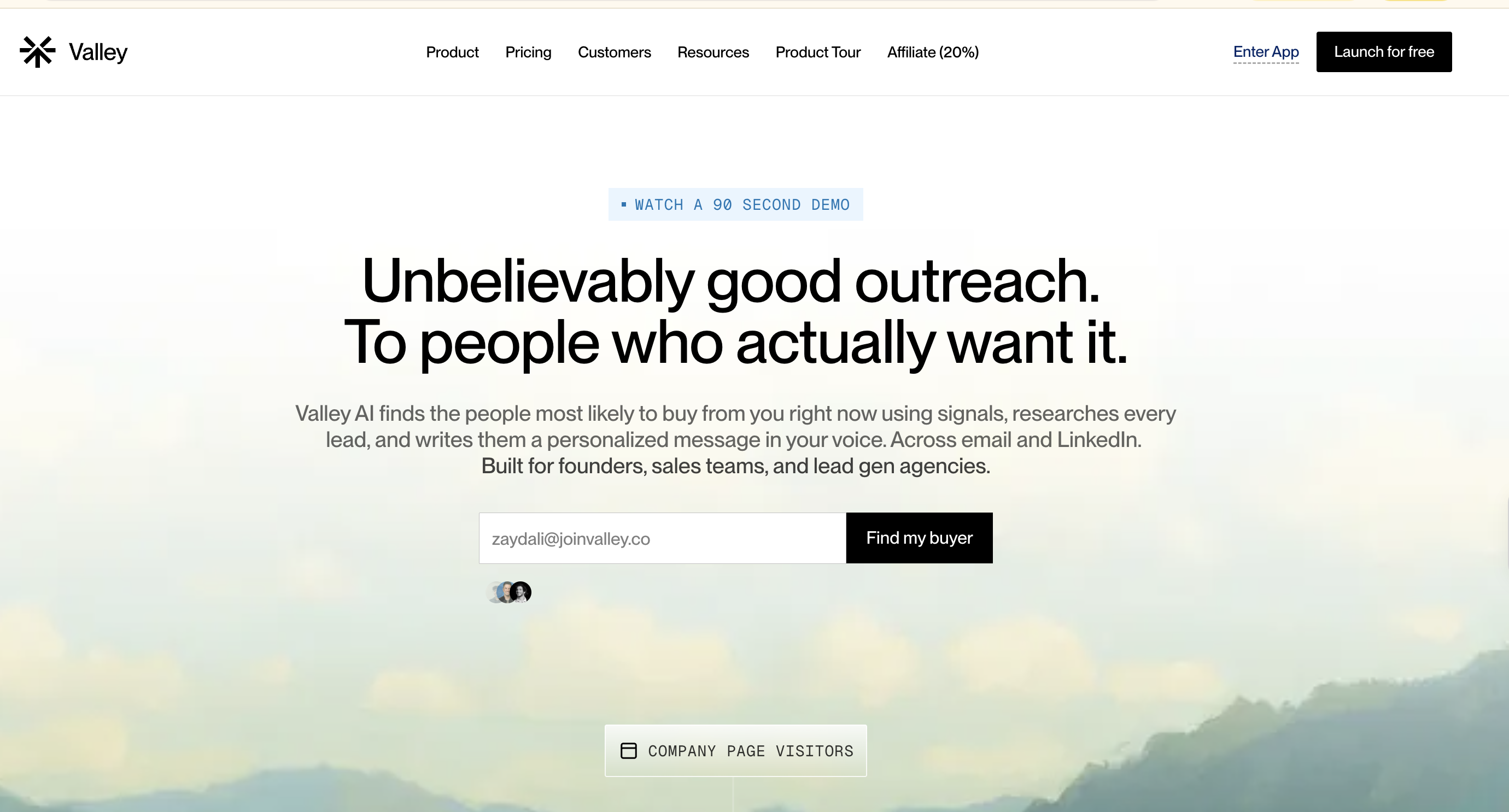
Valley connects LinkedIn engagement to qualification and sender-led outreach.
Valley is a strong fit when LinkedIn engagement is already your main buying signal. It can pick up profile views, followers and post engagement, then qualify those people against your ICP before moving them into LinkedIn outreach. Email can also be added into the same sequence.
The main limitation is scope. Valley is built around a connected LinkedIn account, so its strongest signals come from activity happening on LinkedIn. Adding more senders also means adding more seats.
Valley Deep expands the research layer beyond LinkedIn, but the core product is still much more LinkedIn-centric than tools built for Reddit, forums or broader community monitoring.
Key features#
Finds LinkedIn profile viewers, followers, and post engagers.
Scores prospects against an ICP before enrollment.
Researches prospects and generates outreach messages.
Runs LinkedIn sequences from a connected sender account.
Adds email branches within the same sequence.
Pricing#
Everything costs $199 per month or $149 per month billed quarterly for one connected LinkedIn account, unlimited leads and campaigns, qualification, research, messaging, and a seven-day trial.
Everything + Deep costs $499 monthly or $419 billed quarterly and includes $300 in Deep credits plus onboarding. Scale uses custom pricing with a five-seat minimum. Valley Studios costs $1,499 per month for a managed service. There is no permanent free plan.
Pros#
Connects LinkedIn engagement directly to qualification and outreach, reducing the gap between activity and enrollment.
Captures profile views, follows, and post engagement without asking a rep to prospect each source manually.
Filters for ICP fit before using a sender account's LinkedIn capacity.
Keeps LinkedIn and email in the same branching sequence when one channel does not earn a reply.
Cons#
Each self-serve seat maps to one LinkedIn sender.
Signal coverage centers on LinkedIn unless Deep Research is added.
The model depends on enough relevant LinkedIn activity to keep sequences supplied.
Who should choose it#
Valley is better than Gojiberry when LinkedIn engagement remains the signal source and one sender needs deeper qualification plus sequence control. Gojiberry offers broader behavioral triggers across social and web activity.
For teams with limited LinkedIn capacity, the ICP filter needs to run before enrollment. Actions spent on poor-fit engagers cannot be recovered later.
Related Read: 9 Best Valley Alternatives for Personalized AI Sales Outreach in 2026
3. Unify: orchestrate outbound from many intent sources#
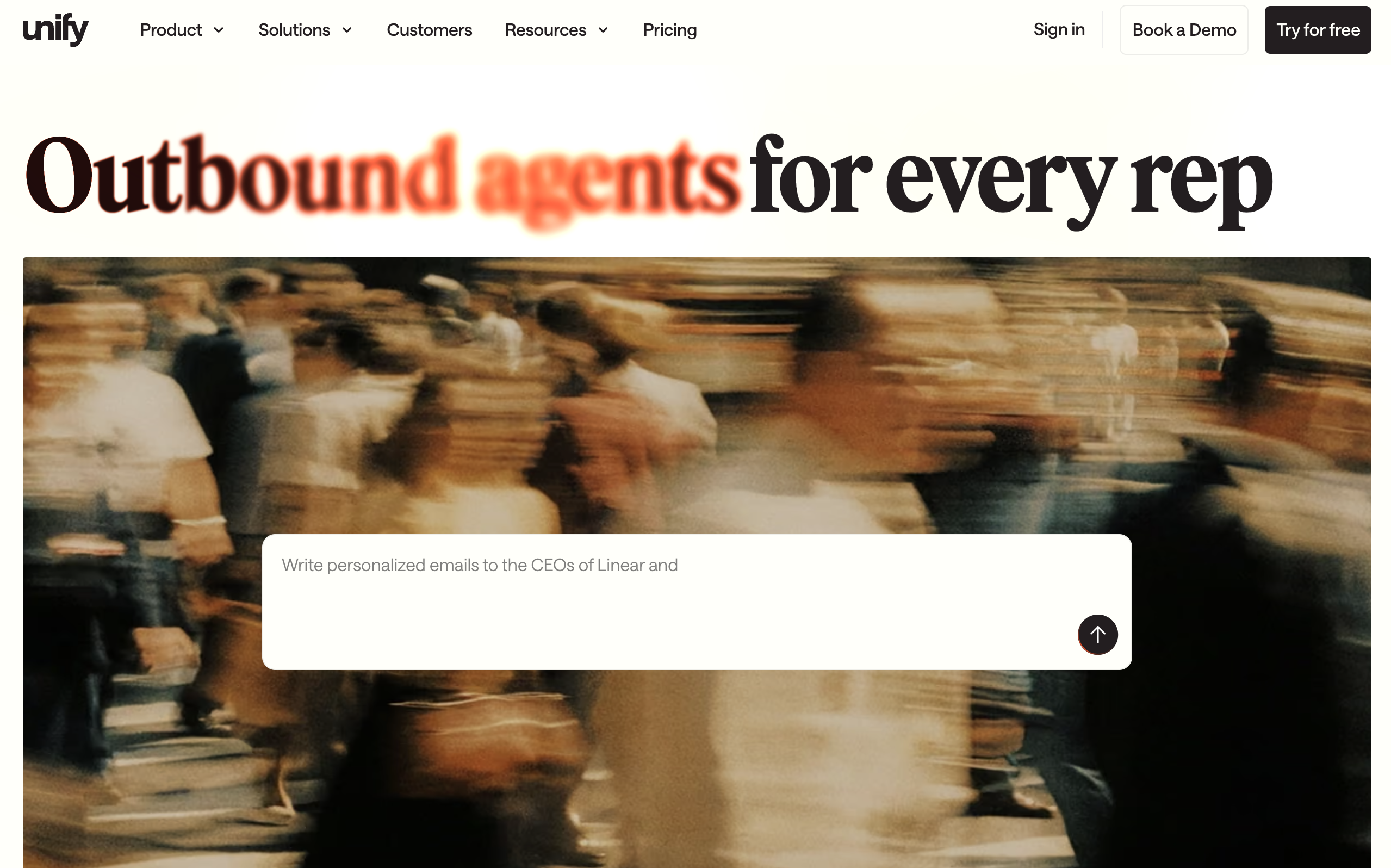
Unify orchestrates signals across CRM, web, hiring, and product data.
Unify becomes useful when the signal is distributed across systems. A website visit can enter the same Play as a CRM change, hiring event, product event, or third-party signal. The Play finds the relevant contact, enriches the record, writes the message, and launches a sequence or syncs the result.
That is the operational difference. Gojiberry provides a packaged signal-to-outreach agent. Unify gives RevOps a shared orchestration layer for several inputs. A company can use the same qualification and outbound logic when an account visits pricing or adds a new sales leader.
Key features#
Builds outbound Plays from website, CRM, hiring, product, and third-party signals.
Finds and enriches contacts after a trigger meets qualification rules.
Generates messages and launches email sequences.
Syncs records with CRM systems and sends Slack notifications.
Supports managed mailboxes and signal-triggered automation on the Business tier.
Pricing#
Free costs $0 for up to three seats with limited credits and one mailbox per seat.
Base costs $20 per seat monthly with 800 credits.
Pro costs $60 per seat with 2,400 credits, read-only CRM sync, Slack notifications, and a 14-day trial. Business uses custom annual pricing and adds website intent, product signals, signal-triggered automation, managed mailboxes, and read-write CRM integrations.
Pros#
Brings several first-party and third-party events into the same Play, so teams do not need separate automation for every trigger.
Moves records from CRM to enrichment and sequencing with fewer manual handoffs.
Gives RevOps one place to control multi-source routing and precedence.
Reuses the same qualification logic across website, hiring, product, and CRM events.
Cons#
Website, product, and automated signal Plays sit on the custom Business tier.
More inputs create more work around field mapping and precedence.
Poor source hygiene can send conflicting account states into the same Play.
Who should choose it#
Unify is better than Gojiberry when several systems need to start one repeatable outbound process. It is unnecessary overhead when one operator only wants qualified behavioral signals and immediate outreach.
Decide which source wins when CRM stage, product state, and a fresh web visit disagree. That governance work is part of owning Unify.
Read: Our article on LinkedIn social listening for buyer signals explains where engagement becomes usable intent and where it stays audience activity.
4. Trigify: route person-level social signals into your own stack#
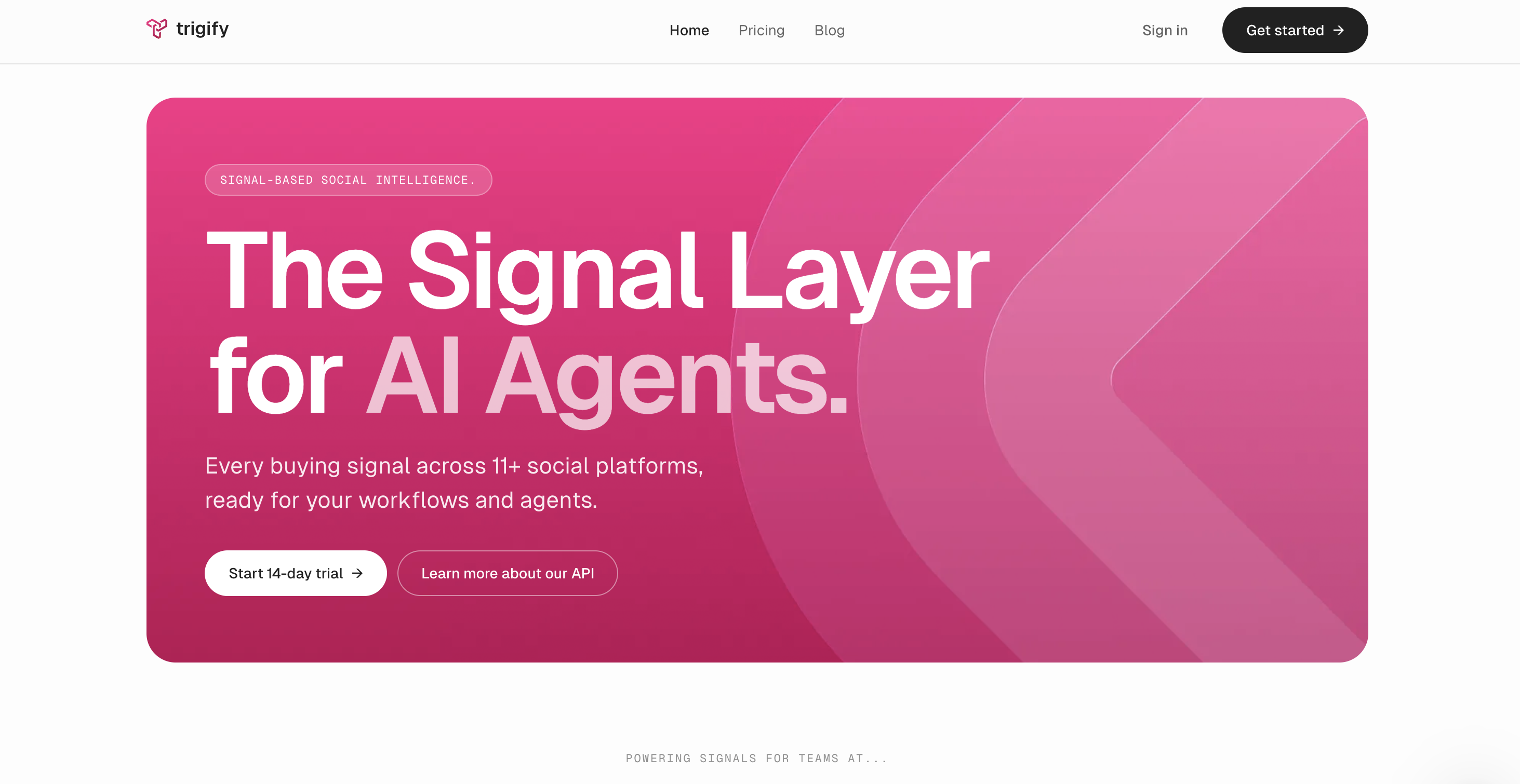
Trigify adds social signals and routing to an existing outbound stack.
Trigify monitors sources including LinkedIn activity, X, Reddit, YouTube, podcasts, and other supported feeds. It can resolve activity to people, qualify and enrich records, build workflows, and generate messaging. The full sequence often runs elsewhere.
That handoff is the reason to buy it. A team already using Smartlead, Instantly, HeyReach, or La Growth Machine can add signals without replacing a sender that has working domains, mailboxes, limits, and reply handling. Gojiberry removes more assembly. Trigify leaves more of the stack under the operator's control.
Key features#
Monitors activity across LinkedIn, X, Reddit, YouTube, podcasts, and supported feeds.
Resolves source activity to people and enriches available records.
Builds qualification and routing workflows.
Connects through integrations, API, and MCP.
Generates messaging and passes records to external senders.
Pricing#
Starter costs $40 per month with 4,000 credits, 25 listening searches, 25 workflows, two seats, and a 14-day trial. Max costs $199 with 40,000 credits, 100 searches, 100 workflows, five seats, and BYOK.
Enterprise includes at least 200,000 credits with custom limits and SSO. Overages cost $0.012 per credit.
Pros#
Adds social signals without forcing a team to replace the sender that already manages domains and replies.
Keeps the person connected to the source activity, giving qualification and messaging a specific reason to act.
Routes records through workflows, integrations, API, or MCP when the stack needs a custom handoff.
Covers several social and content sources instead of relying on one LinkedIn behavior.
Cons#
Listening, enrichment, engagement, and workflow actions draw from credits.
A complete outreach loop usually depends on another subscription.
Broad listening can create cleanup work when searches are not tightly scoped.
Who should choose it?#
Trigify beats Gojiberry when the sender is already solved, and the missing layer is social-signal collection plus routing. Gojiberry wins when one vendor needs to own discovery and outreach.
Cost per qualified record matters more than cost per captured result because broad searches can fill the feed with events a sequencer cannot use.
Insightful Read: For a broader view of that job, see our guide to competitor monitoring tools for B2B teams .
5. Common Room: combine product, community, web, and CRM behavior#
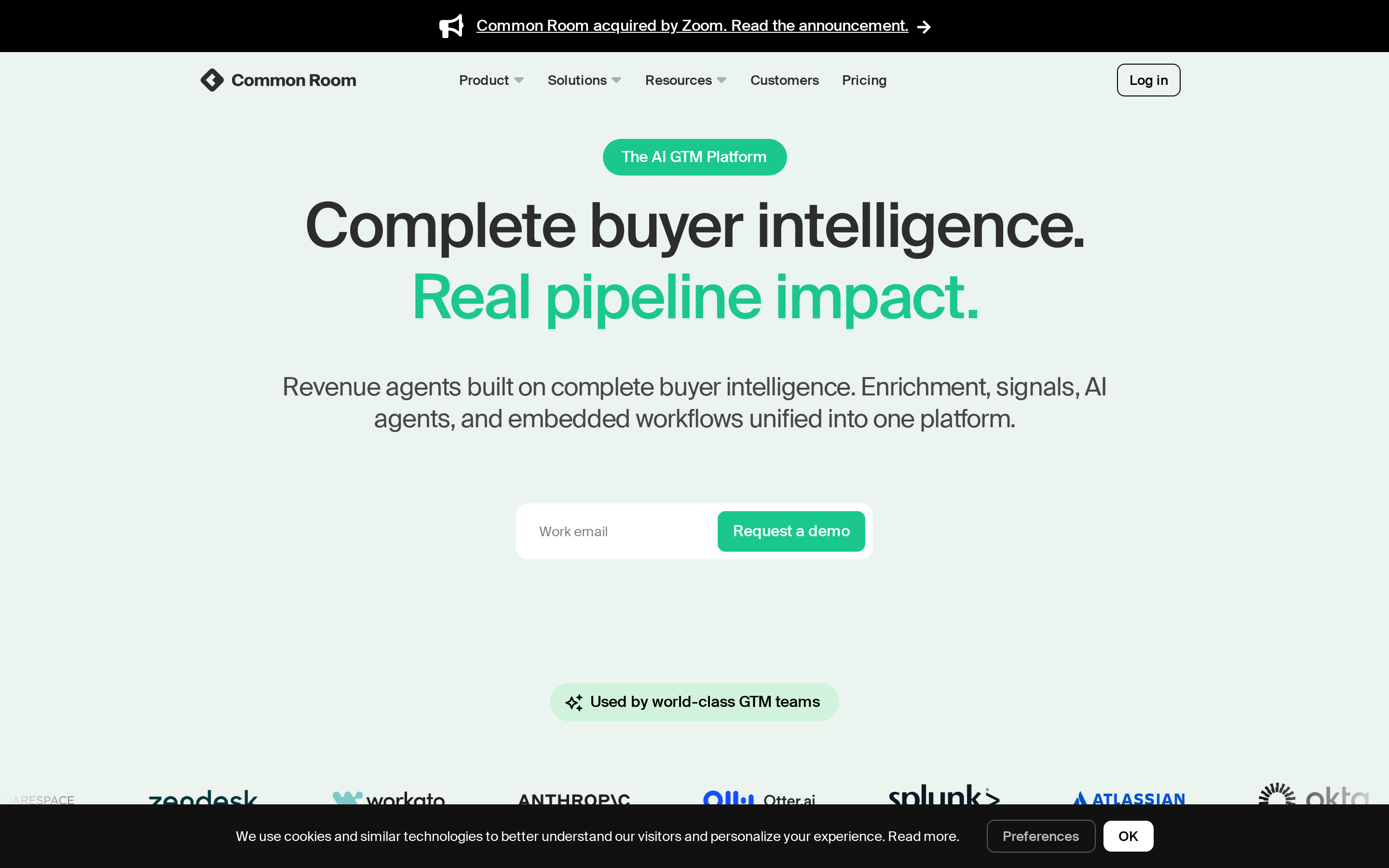
Common Room joins person and account intelligence for mature GTM teams.
A pricing-page visit alone can be weak. Add an active trial, relevant CRM history, and recent account engagement, and the same visit can justify immediate sales action. Common Room is built for that combination.
Person360 joins activity from product, website, CRM, community, and custom sources into person and account records. Teams can score those records, create segments, send alerts, and move qualified people into a sales engagement platform.
The model can carry more evidence than Gojiberry's packaged agent, but someone must own the data model.
Key features#
Joins product, website, CRM, community, and custom activity in Person360 records.
Resolves activity to people and accounts.
Scores records and builds target segments.
Sends alerts and runs workflows from qualified events.
Syncs selected records to CRM and sales engagement systems.
Pricing#
Essential costs $2,500 per month, billed annually. It includes five seats, up to 100,000 contacts, 5,000 RoomieAI research credits, 2,500 Prospector credits, unlimited alerts and workflows, and selected integrations.
Advanced and Enterprise use custom pricing with more contacts, seats, credits, and integration coverage. No free plan or trial is published.
Pros#
Combines several weak events into a more useful person or account view before sales acts.
Preserves activity history through Person360, so a recent event can be read beside prior product and CRM context.
Joins first-party and external activity in one intelligence layer instead of splitting judgment across dashboards.
Gives mature GTM teams a shared record for marketing, sales, and RevOps decisions.
Cons#
Intent signals can sometimes feel too broad, making it harder to understand exactly why an account was surfaced or what triggered the score.
De-anonymized visitor data still needs validation before it is treated as a reliable sales signal.
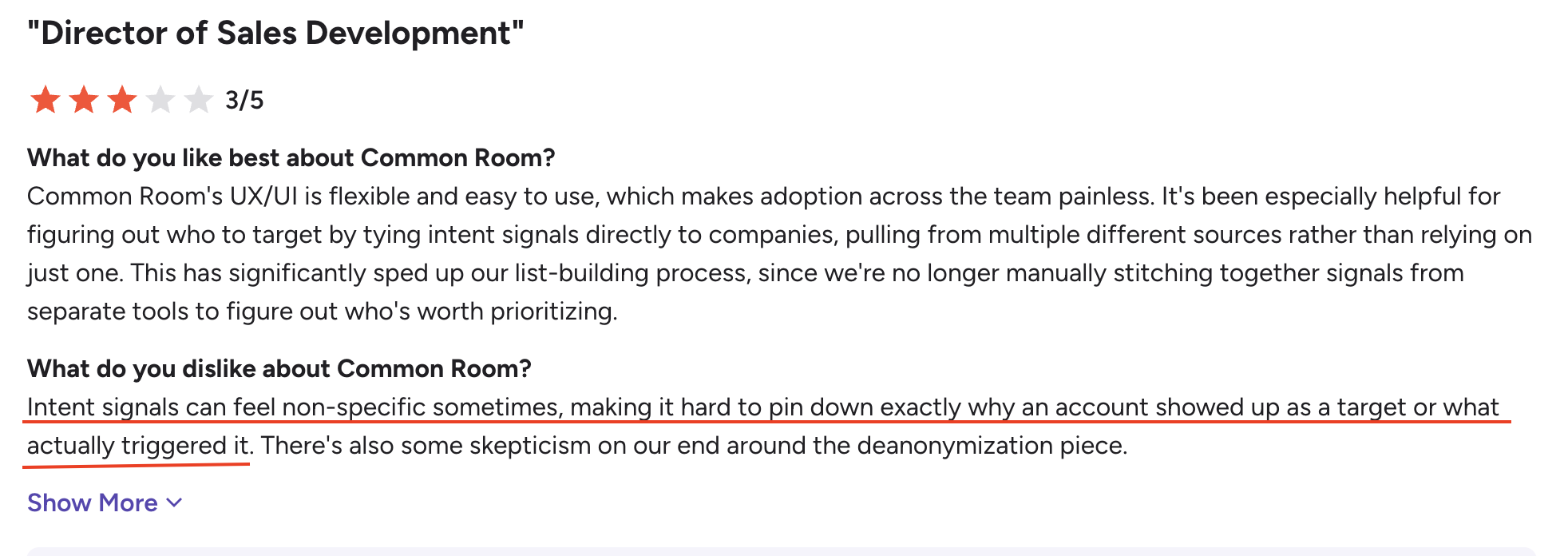
Common Room becomes more useful as more data sources are connected, but that also makes scoring rules and data quality harder to manage over time.
Essential starts at $30,000 per year, so the value needs to be clear before committing.
Who should choose it#
Common Room is better than Gojiberry for an established GTM team that needs product, web, CRM, and public activity to inform one account model. A founder with one motion will reach outreach faster with Gojiberry, Valley, or CommunityTracker.
Its value depends on joining events that refer to the same person or account within a meaningful window. Old unrelated activity can inflate a score without improving intent.
Related Read: 9 Best Common Room Alternatives To Find Actual Buyers in 2026
6. RB2B: act on identifiable website visitors#
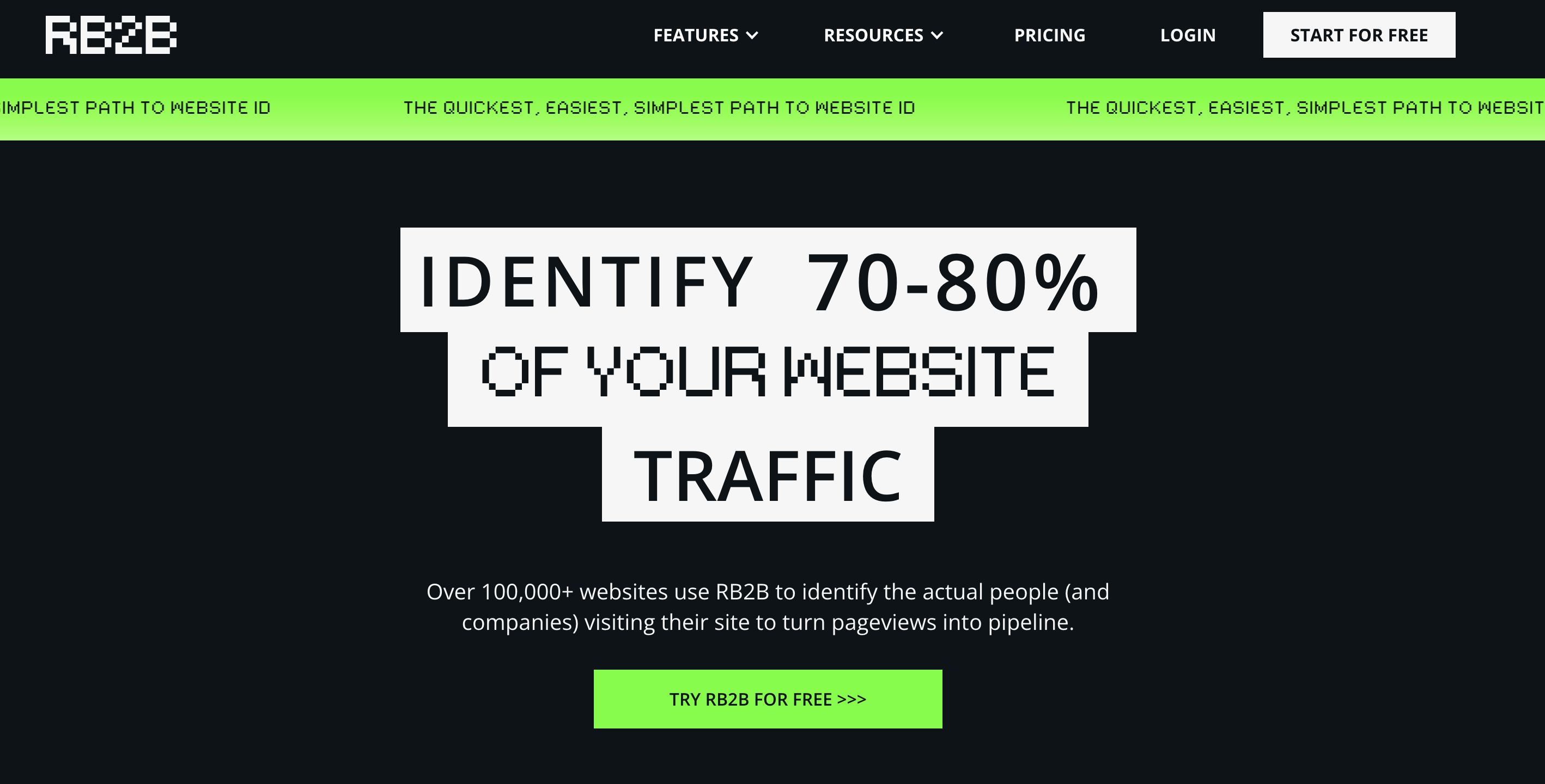
RB2B identifies people and companies after a website visit.
RB2B starts after someone reaches your site. Its script identifies companies globally and can resolve person-level details for US traffic on paid tiers. Pro adds business email addresses, hot-page tagging, ICP filtering, and outbound integrations.
Knowing that a person visited pricing is useful. It still does not explain why they are buying. The best RB2B workflow combines page history, repeat visits, and ICP fit before a rep acts. A lone homepage view deserves less urgency than a repeat visitor who reaches pricing and matches the target account profile.
Key features#
Identifies companies visiting a website.
Resolves person-level details for supported US traffic on paid plans.
Records page history and repeat visits.
Tags hot pages and filters visitors against an ICP.
Routes identified visitors through Slack, CRM, and outbound integrations.
Pricing#
Free costs $0 for 150 monthly company resolutions with no unmasked person details.
Starter costs $79 per month for 300 resolutions and LinkedIn URLs through Slack or Teams, but it omits business emails and other integrations.
Pro starts at $149 for 600 credits and adds emails plus integrations. Pro+ starts at $199 with premium resolution. A seven-day full-featured trial is available.
Pros#
Turns anonymous website traffic into person or company records that sales can route.
Uses page history and repeat visits to separate a brief visit from sustained buying activity.
Lets teams prioritize hot pages and ICP-fit visitors before sending every resolution to reps.
Pushes identified visitors into tools the GTM team already uses.
Cons#
The workflow produces nothing until relevant buyers visit the site.
Basic contact-level resolution focuses on US traffic.
Identity resolution will not return a usable person for every visit.
Who should choose it#
RB2B is better than Gojiberry when website visits consistently predict pipeline and fast identification matters most. Gojiberry is stronger before the buyer reaches your domain and when a behavioral trigger provides the reason to engage.
High traffic from students, job seekers, or existing customers can make the dashboard busy without creating a useful sales queue.
7. Warmly: convert qualified website traffic into inbound action#
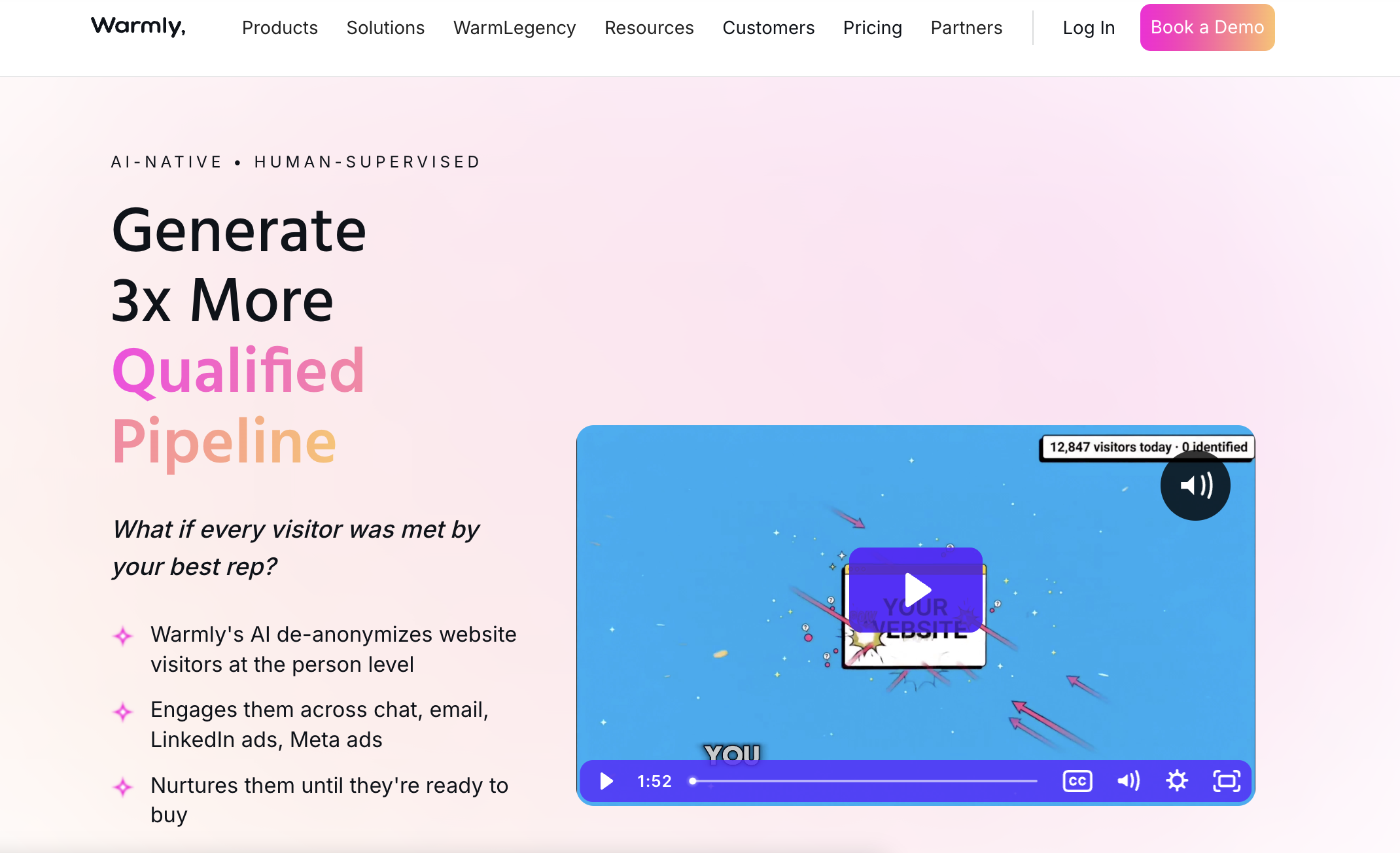
Warmly turns website intent into routing, chat, and email follow-up.
Warmly makes sense after a company has earned meaningful qualified website traffic. It de-anonymizes visitors, checks fit, routes high-value sessions, and can continue through chat, email follow-up, retargeting, or connected sales systems.
This is later-stage intent than many Gojiberry signals. The visitor already reached your property. Warmly can react quickly, but the quality of that motion depends on who arrives. Low traffic or poorly matched traffic leaves little for even a well-built inbound workflow to convert.
Key features#
De-anonymizes company and supported person-level website visitors.
Scores visitor fit and routes high-value sessions.
Starts chat and email follow-up from inbound activity.
Syncs visitor data with CRM and connected sales systems.
Supports retargeting and other inbound actions.
Pricing#
Free costs $0 and identifies up to 500 website visitors per month at the company level. AI Web-Deanonymization starts at $10,000 per year with at least 10,000 monthly credits, named contacts and companies, ICP filtering, routing, CRM sync, and integrations.
Inbound Chat starts at $20,000 per year. AI Inbound Autopilot starts at $30,000 per year. Quarterly contracts are available, while annual billing carries a 30% discount.
Pros#
Acts while a qualified visitor is still active, shortening the delay between buying activity and sales response.
Connects identification with routing, chat, email, and inbound actions in one workflow.
Works well when website traffic already correlates with pipeline and teams know which pages carry intent.
Reduces manual handoffs between visitor identification and the rep or system responsible for response.
Cons#
Value falls quickly when relevant website traffic is sparse.
Company identification does not always resolve a usable person.
Visitor identification coverage can be uneven, leaving part of your website traffic unresolved.
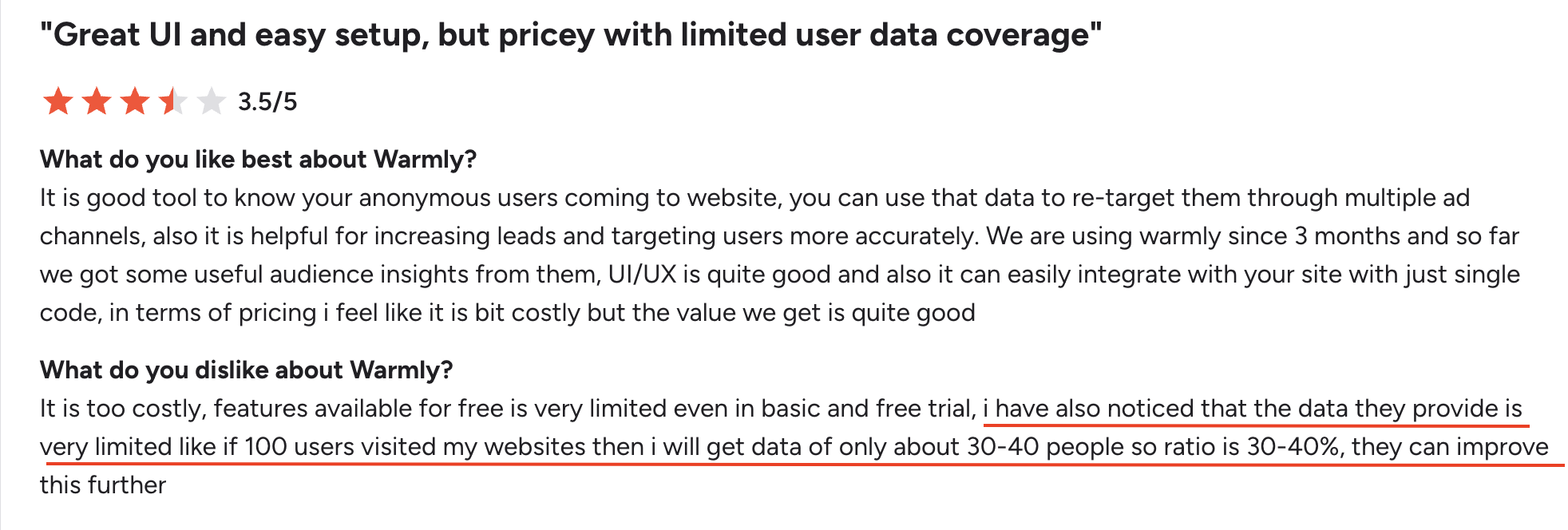
Misconfigured ICP and page rules can route low-value sessions as urgent intent.
Who should choose it#
Warmly is better than Gojiberry when qualified website sessions already arrive at enough volume and speed-to-lead affects conversion. Gojiberry is better when the team needs to discover buyers before they visit.
When only a small share of sessions comes from target accounts, improving traffic quality will matter more than automating response to the existing mix.
8. Clay: build custom signal and enrichment logic#
Clay provides custom data waterfalls, research, and GTM workflow logic.
Clay is a better fit when you want to build the prospecting workflow around your own logic instead of following a fixed setup.
You can choose which data providers to use, how enrichment should run, what signals matter, and how leads should be scored before they move forward. That could include job changes, hiring activity, company news, website intent, CRM updates, or data coming in through an API or webhook.
Clay also supports native email sequencing. LinkedIn outreach still needs another tool or a manual step, so it can replace a large part of the research and enrichment workflow, but not Gojiberry’s full LinkedIn-led automation out of the box.
Key features#
Runs enrichment waterfalls across selected data providers.
Uses Claygent for custom web research and record completion.
Builds scoring, qualification, and routing logic in tables.
Accepts signals through native sources, APIs, and webhooks.
Runs native email sequences and connects to external sequencers.
Pricing#
Free costs $0 for 100 monthly Data Credits, 500 Actions, unlimited seats and tables, 200 rows per table, waterfalls, Claygent, and native email sequencing.
Launch starts at $185 per month with 2,500 Data Credits and 15,000 Actions, phone enrichment, signal tracking, and external sequencer integrations.
Growth starts at $495 with 6,000 Data Credits, 40,000 Actions, CRM sync, HTTP API, web intent, and webhook automation. Enterprise is custom. A 14-day trial is available.
Pros#
Gives operators control over provider order and stopping rules, which can improve enrichment coverage without paying every provider for every row.
Supports custom research and qualification logic when an off-the-shelf score misses the team's ICP.
Lets teams route records according to their own data and workflow conditions.
Works as an orchestration layer behind specialist signal tools when one source does not cover the full motion.
Cons#
Actions and Data Credits are separate meters.
A capable workflow still needs an owner who understands its logic.
LinkedIn sending depends on another platform or a manual step.
Who should choose it#
Clay is better than Gojiberry when custom data logic creates a real competitive advantage and a GTM engineer or RevOps operator can maintain it. Gojiberry wins when the team wants an opinionated agent that works without owning the plumbing.
Custom orchestration earns its cost when the qualification logic is specific and stable. A standard job-change campaign can add maintenance without adding information.
Insigthful Read: For the signal layer alone, our review of social listening tools for B2B teams shows when a dedicated source belongs upstream of Clay.
Which Gojiberry AI alternative should you choose?#
Choose based on where you want to find intent and how far you want the tool to carry that signal.
The right choice depends mostly on where your strongest intent signals come from.
Stay with Gojiberry for behavioral signals with built-in LinkedIn and email outreach.
Choose CommunityTracker for social listening across 11 sources plus intent filtering and follow-up through LinkedIn or email where the prospect can be identified.
Choose Valley for LinkedIn engagement, qualification and outreach from one connected sender.
Choose Trigify when you want social signals but prefer to keep your existing sequencer.
Choose Unify for multi-source intent across CRM, website, hiring and product data.
Choose Common Room when several signals need to come together at the person or account level.
Choose RB2B for website visitor identification.
Choose Warmly for website intent with routing, chat and inbound follow-up.
Choose Clay when you want to build your own enrichment, scoring and GTM workflows.
In short, start with the signal you trust most. That usually makes the shortlist much smaller.
Use CommunityTracker to turn a conversation into the next move#
Gojiberry deserves credit for joining behavioral signals, qualification, enrichment, and outreach in one affordable product. Valley goes deeper on a LinkedIn sender. Common Room builds a richer account model, and Clay gives an operator more control.
CommunityTracker fits when the source conversation is the reason a rep can write something relevant. It keeps that context attached as the team moves from signal discovery to GTM action.
Try CommunityTracker when you want to catch a buyer asking for an alternative, enrich available contact details, and continue through LinkedIn or email. If Gojiberry already turns its behavioral signals into enough qualified conversations, keep the workflow that is working.
Frequently asked questions#
What is the best Gojiberry AI alternative?#
CommunityTracker is the closest fit for social and community buying signals. Valley is stronger for LinkedIn-led outreach, while Unify and Common Room suit broader multi-source intent.
What is the best free alternative to Gojiberry?#
CommunityTracker is good for testing Reddit signals. RB2B is better for website visitor identification, while Clay is useful for learning custom enrichment workflows.
Is CommunityTracker better than Gojiberry AI?#
It depends on the use case. CommunityTracker is stronger for social listening across 11 sources. Gojiberry is better when broader behavioral signals and automated outreach already fit your workflow.
Is Clay a direct replacement for Gojiberry?#
Not really. Clay is better for custom research, enrichment and scoring. Gojiberry is more plug-and-play for signal-based LinkedIn and email outreach.